
Let’s Get Honest for a Second
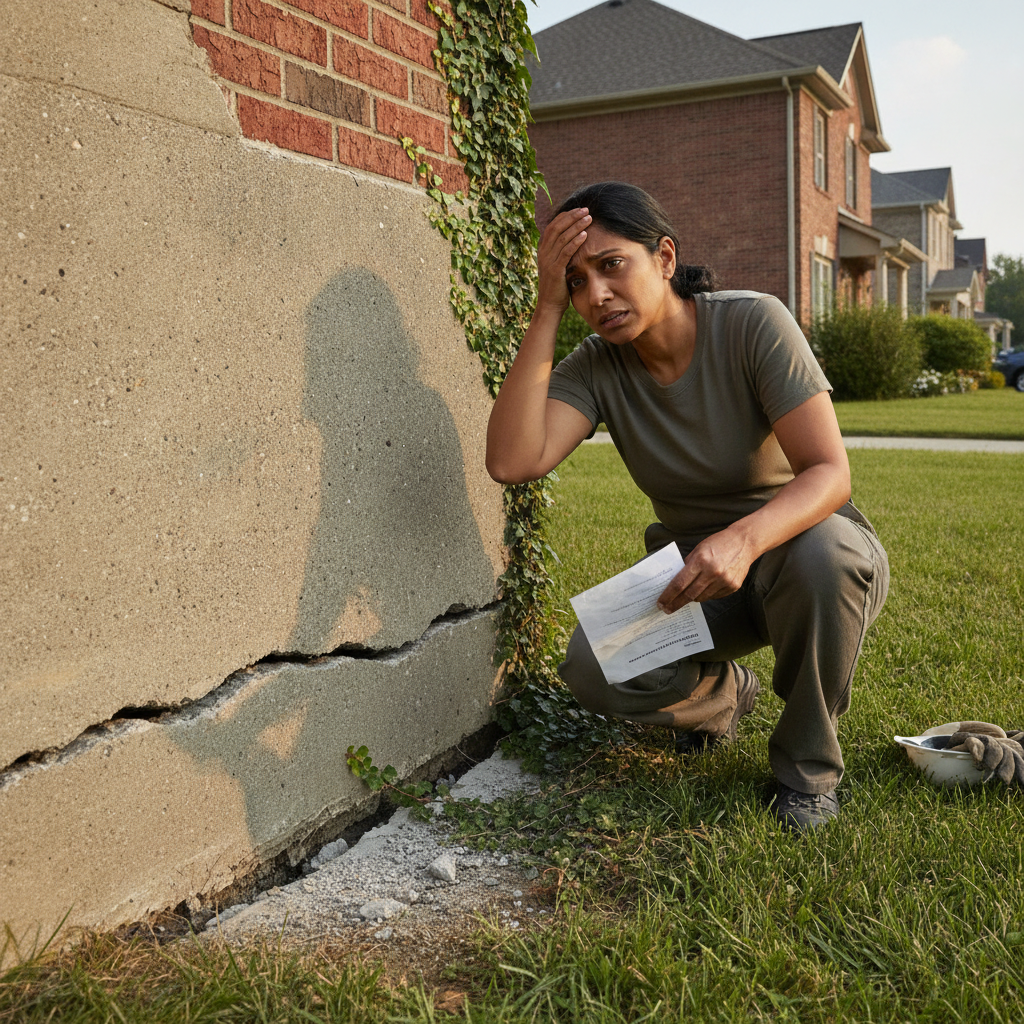
I was sitting with a homeowner in Greenville not long ago, staring at a crack that ran
from the living room floor almost up to the ceiling. He looked at me and said,
“So… my insurance will cover this, right?”
You could hear the hope in his voice. Because foundation work can get
expensive fast. Nobody wants to write that check if there’s even a tiny
chance their insurance might step in.
If you’re wondering what foundation damage is covered by homeowners insurance in North Carolina,
you’re not alone. A lot of people don’t find out how this really works until
after they’ve filed a claim and gotten that painful denial letter.
Let’s Make This Simple
Home insurance almost never says “We cover foundation repair” in big bold letters.
Instead, it covers certain causes of damage. The foundation is just one of the things
that might be affected.
So the real question isn’t “Is foundation covered?” It’s:
What actually caused the damage?
And here’s the truth: if the cause is sudden, accidental, and listed
as a “covered peril” in your policy, there’s a chance you’re in luck.
If it’s slow, long-term, or considered “maintenance” — that’s usually on you.
Here’s the Backstory: How Policies Usually Look
Every policy is a little different, and I don’t know everything, but most standard
homeowners policies in North Carolina work kind of like this:
-
They do cover sudden events like fire, explosion, certain types of water damage,
or a vehicle hitting your home. - They don’t cover long-term settling, poor construction, or lack of maintenance.
-
They might cover things like plumbing leaks that cause foundation damage, but only if you can
prove the leak was sudden, not going on for years.
And to make it more fun, different companies use different wording. Some policies
are “named peril” (they list what they cover). Others are “all risk” with a list
of exclusions. Always read the exclusions. That’s where the surprises live.
Let’s Break This Down: What’s Usually Covered
Here are some foundation situations where insurance might help in North Carolina:
1. A Burst Pipe That Suddenly Washes Out Soil
Imagine a supply line under your slab bursts overnight in your Charlotte home.
Water rushes out, the soil gets washed away, and a corner of your house dips.
Now you’ve got cracks, stuck doors, and your tile is splitting.
In many policies:
-
The resulting damage (like cracked walls, damaged flooring, possible foundation movement)
can be covered. -
The cost to fix the broken pipe itself might or might not be fully covered,
depending on your policy.
The key is that the event is sudden and accidental, not a leak that
dripped quietly for 10 years.
2. A Covered Water Event From Above (Not Groundwater)
Let’s say a second-story bathroom line explodes in your Greensboro house and
floods everything, including the crawl space. The extra moisture swells wood, the
structure shifts, and the foundation starts showing stress cracks.
That kind of “water from inside the home” event is sometimes covered,
including the damage it causes to structural parts of the house.
3. Fire or Explosion That Damages the Structure
This one’s a little dramatic, but it happens. A fire or explosion (like a gas leak)
can absolutely damage the foundation. Most policies clearly cover fire/explosion.
If the foundation cracks or spalls because of the heat or impact, that’s typically
part of the covered loss.
4. A Vehicle Slamming Into Your House
If someone loses control on a wet road in Columbia and a car hits the
corner of your home hard enough to crack the foundation, that’s usually a covered event.
The cause is sudden, accidental, and very clear. Policies usually list something
like “vehicle impact” as a named peril.
Here’s the Twist: What’s Usually Not Covered
This is the part nobody really wants to hear, but you need to know it before you
start counting on your insurance to fix everything.
1. Normal Settling or Shrinkage
Every house in North Carolina settles a bit. The clay soil swells when it’s wet,
shrinks when it’s dry. Over years, that movement can lead to:
- Hairline foundation cracks
- Minor drywall splits at corners
- Small gaps around doors or windows
Almost every policy has language like “settling, cracking, shrinking, bulging,
or expansion of foundations, walls, floors, or ceilings” is not covered.
2. Long-Term Drainage Problems
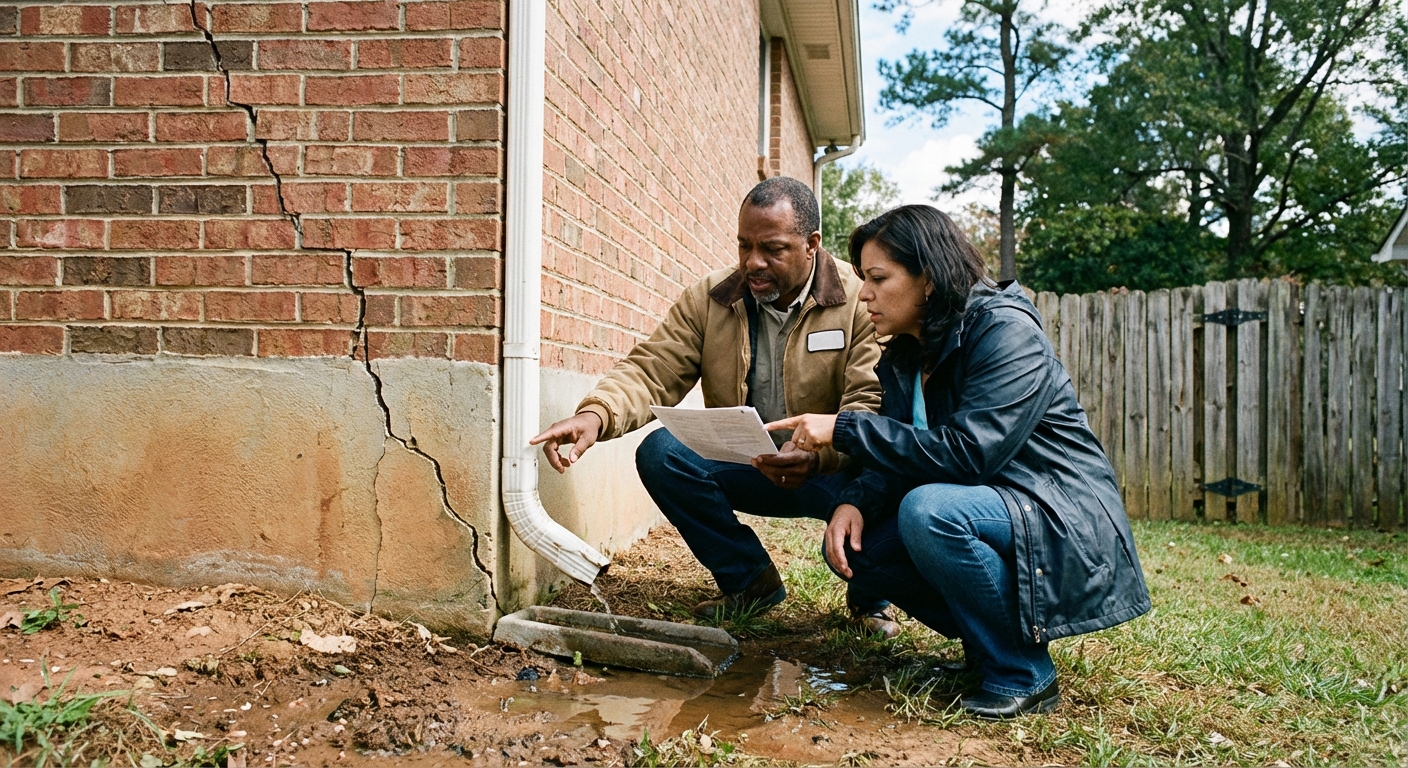
Gutters dumping water right at the foundation. Downspouts missing. Yard sloping
toward the house. Water pooling around your home every time it rains in Asheville.
Over time, this can erode soil, cause movement, and create major cracks.
But from the insurance company’s point of view, that’s a maintenance issue,
not a sudden accident.
3. Poor Construction or Design
If the original builder cut corners — wrong footings, not enough steel,
bad soil prep — and your foundation fails because of that, insurance typically
won’t touch it.
They’re covering sudden losses, not fixing someone else’s construction mistakes.
4. Long-Term Plumbing Leaks
This one trips a lot of people up.
If a pipe slowly leaks for years under your slab, and you finally notice when
your floor starts to slope, many policies specifically exclude damage from
“continuous or repeated seepage or leakage of water.”
They may cover sudden bursts; they usually don’t cover slow drips.
5. Earth Movement and Flooding
Most standard homeowners policies exclude:
- Earthquakes
- Landslides
- Sinkholes (sometimes)
- Flooding and surface water
For those, you usually need separate policies or endorsements, like earthquake
coverage or a separate flood policy through the NFIP.
The exact rules vary, and this is where a local agent in North or South Carolina
can really clear things up.
Let’s Step Back for a Second: Why This Matters
Foundation work in our area can easily run from a few thousand dollars up to
tens of thousands, depending on how deep the problem goes. That’s a car-level decision.
Knowing ahead of time how your insurance might respond gives you three big advantages:
- You can catch small issues before they snowball.
- You can decide when it’s worth filing a claim (and when it’s not).
- You can plan for what you’ll probably have to pay out of pocket.
And here’s what surprised me the first time I really dug into this: sometimes the
most helpful thing insurance does isn’t paying for the entire foundation job.
It’s covering the related damage (floors, walls, finishes) while you handle the structural fix.
A Quick Reality Check: How to Tell If Your Situation Might Be Covered
Here’s a simple way to start figuring it out on your own:
-
Ask yourself, “Did something sudden happen?”
A burst, a crash, a fire, a “wow, that just happened” moment — that’s what insurance
usually looks for. -
Look for a clear date.
If you can’t say when the damage started and it’s been “getting worse for years”,
insurers will probably see it as long-term. -
Check your policy for these words:
“Exclusions,” “earth movement,” “settling,” “seepage,” “leakage,” “foundation.”
That language tells you a lot. -
Document everything.
Take photos, videos, and notes. If you end up filing a claim, this helps a ton. -
Get a professional opinion.
A foundation inspection report that explains the likely cause can be
hugely helpful — not just for you, but for an adjuster too.
A Story You’ll Relate To
Let me walk you through a real-life style situation from right here in the Carolinas.
A while back, I met with a homeowner in Spartanburg — we’ll call her Lisa.
She had a 1990s brick home, crawl space foundation, nice neighborhood.
She called because:
- Her dining room floor felt uneven.
- Cracks were showing above door frames.
- One door wouldn’t latch unless she gave it a solid shoulder bump.
When we checked the crawl space, we found:
- Gutters dumping water right next to the foundation.
- Standing water in one corner of the crawl space after rain.
- Wood joists starting to soften from moisture.
The structural movement was very real. But it had been building for years.
There was no single “event” Lisa could point to.
She asked the big question: “Can I use my homeowners insurance?”
We talked it through. Her policy excluded damage from long-term water exposure,
settling, and poor drainage. The fix we laid out for her included:
- Adding drainage and better downspout extensions.
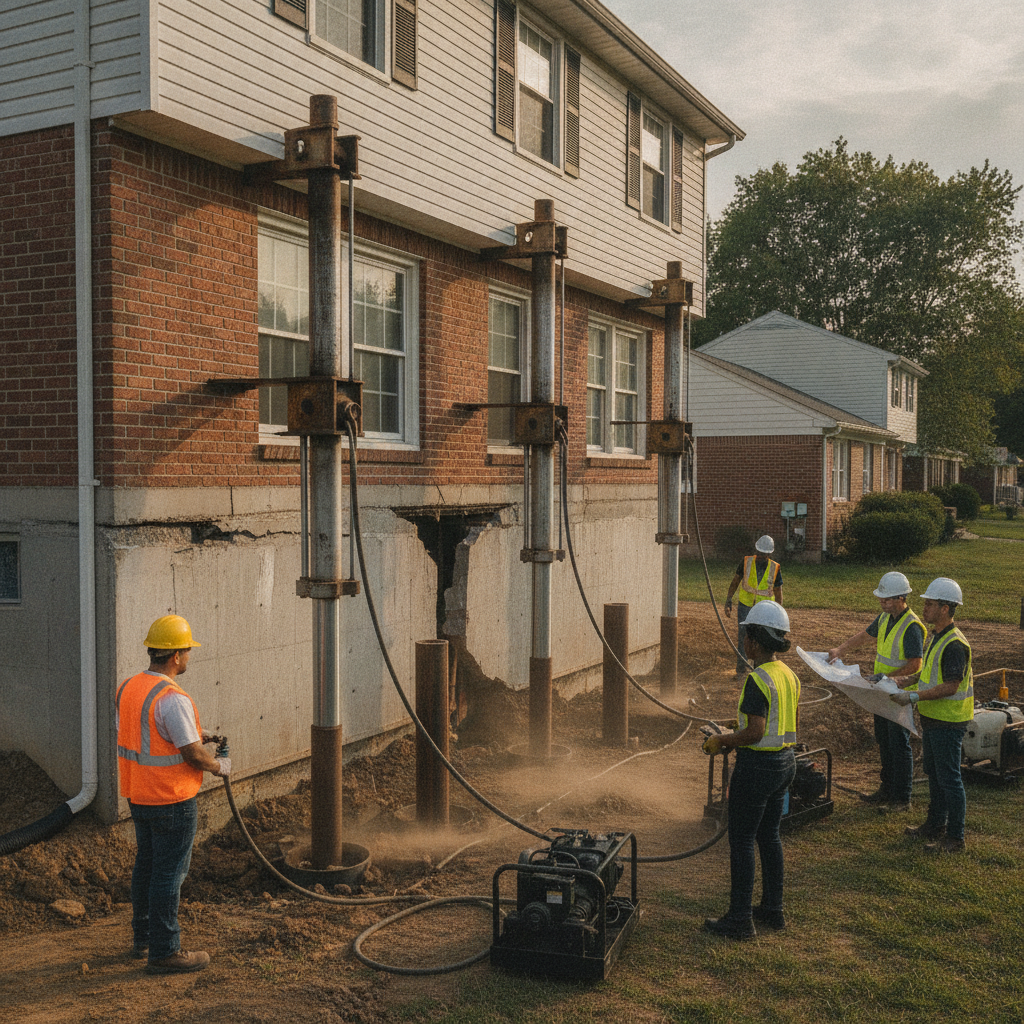
- Reinforcing the sagging area with new supports.
- Drying and conditioning the crawl space so the problem didn’t come back.
None of that was going to be covered. Tough news. But then something clicked:
her insurance agent told her they would cover part of the interior crack repair
after the structural work, because it was considered cosmetic repair following
a structural correction. Not every policy does that, but hers did.
Did insurance pay for everything? No. But it took a couple thousand off the
total bill, which helped.
The Part No One Talks About
Something I keep seeing around Charlotte, Raleigh, and up through Greensboro:
people delay foundation and drainage fixes because they’re hoping
insurance will magically cover it “if it gets bad enough.”
But here’s the kicker — by the time it’s “bad enough,” it’s usually
way more expensive and still not covered, because it falls under long-term settling
or poor drainage.
So waiting for your foundation to clearly fail doesn’t make insurance more
likely to help. It just makes the repair bill bigger.
What You Can Do Next
If you’re staring at cracks and stuck doors right now and thinking, “Okay…
so now what?”, here’s a simple game plan:
-
Step 1: Pull out your policy.
Look specifically for the sections on “Exclusions,” “Water damage,” “Earth movement,”
and “Foundation/structural coverage.” -
Step 2: Make a little damage log.
Photos of cracks, notes about when you first noticed them, any changes over time.
(It doesn’t have to be fancy — your phone is fine.) -
Step 3: Get an unbiased foundation evaluation.
You want someone who will explain what’s happening, what likely caused it,
and what’s urgent vs. what can wait. -
Step 4: Talk to your insurance agent before you file a claim.
Ask very specific questions about whether a sudden event caused your damage or if they
see it as long-term. -
Step 5: Decide if a claim makes sense.
If the damage clearly came from a covered event and the repair is more than your
deductible, a claim might be worth it. If not, it may be better to skip the claim
and just fix the problem.
If You Only Remember One Thing…
When you’re trying to figure out what foundation damage is covered by homeowners insurance in North Carolina,
focus on the cause, not just the crack.
Sudden, accidental event that your policy lists? Maybe covered.
Slow, years-long settling and water issues? Probably not.
Real talk: the fastest way to get clarity is to pair a solid foundation inspection
with a frank conversation with your insurance agent. Start there. If this all feels like
a lot, just pick one small step today — snap some photos, pull out your policy,
or schedule that inspection — and go from there.