
The other day, I was catching up with a friend over at a coffee shop in Greenville, and he was telling me about his backyard. “It’s a swamp,” he said, shaking his head. “Every time we get one of those classic Carolina downpours, my yard turns into a little lake, and the water just sits right up against the house.”
I’ve heard this story a hundred times. That standing water isn’t just ugly; it’s a big, red flag waving right at your foundation. And it’s often the first step on a path that ends with some serious, expensive problems.
So, what’s the fix? Often, it’s something called a French drain. But the first question everyone asks is… what’s it going to cost me?
Let’s Get Honest About the Numbers
Let’s just get right to it, because nobody likes to scroll forever to find the one piece of information they’re looking for. When you start looking into the average French drain installation cost per linear foot in Charlotte, you’re going to see a bit of a range.
If I’m being real, you should probably budget somewhere between $30 and $60 per linear foot for a professionally installed exterior French drain. For interior drains, which are more complex, that price can go up.
So, for a 100-foot drain around part of your house, you’re looking at roughly $3,000 to $6,000. I know, that’s not pocket change. But here’s why it’s not just a number.
What’s Actually Driving That Cost?
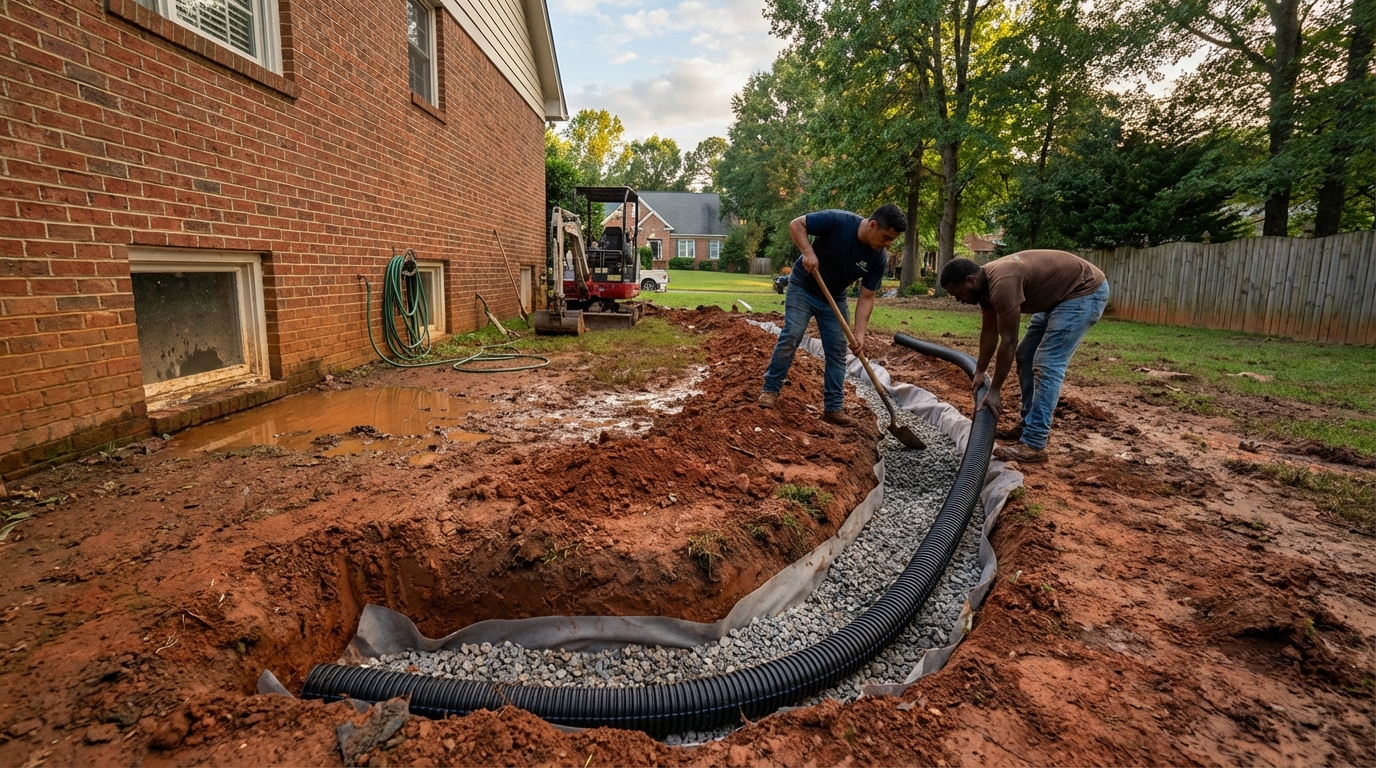
You might be wondering, why such a big range? Well, not all yards are created equal, especially with our famous red clay soil. Here’s what can make the price swing one way or the other:
- Depth and Width: A deeper, wider trench requires more digging, more gravel, and more labor. Simple as that.
- Accessibility: Can a team get a small excavator into your backyard easily? Or are they going to have to do it all by hand because of fences, trees, or a prized rose bush?
- Soil Type: Digging through soft loam is one thing. Digging through dense, rocky Carolina clay is a whole different ballgame.
- Materials: The type of pipe, filter fabric, and gravel used can all affect the final price tag.
Why This Is More Than Just a Soggy Lawn Problem
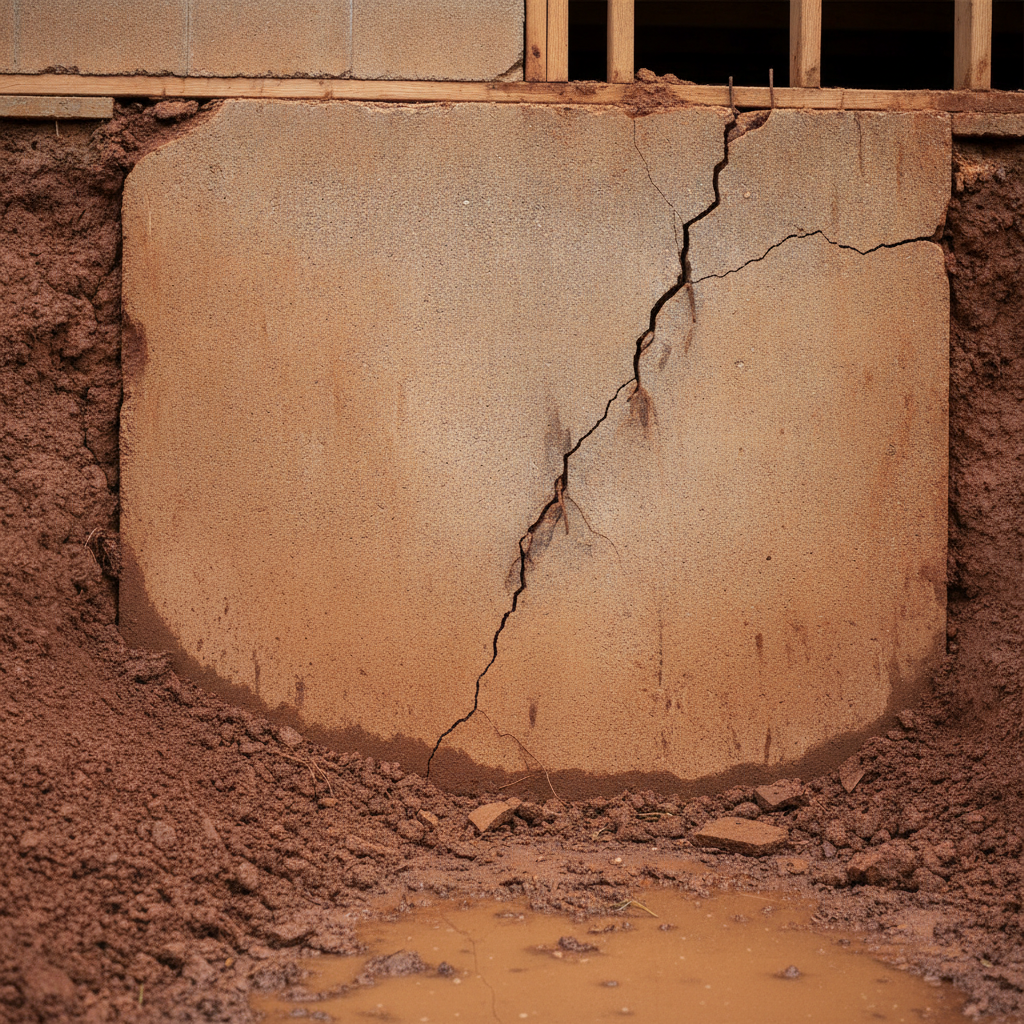
Here’s the part people sometimes miss. That soggy lawn isn’t the real issue. It’s a symptom. The real issue is what all that water is doing to your home’s foundation while it just sits there.
Have you ever noticed your doors or windows getting sticky, especially after a heavy rain? That’s not just the humidity. It’s often a sign that your foundation is shifting under the pressure of water-saturated soil. Answering the question of why are my windows sticking after rain in Charlotte NC, often starts right in your yard.
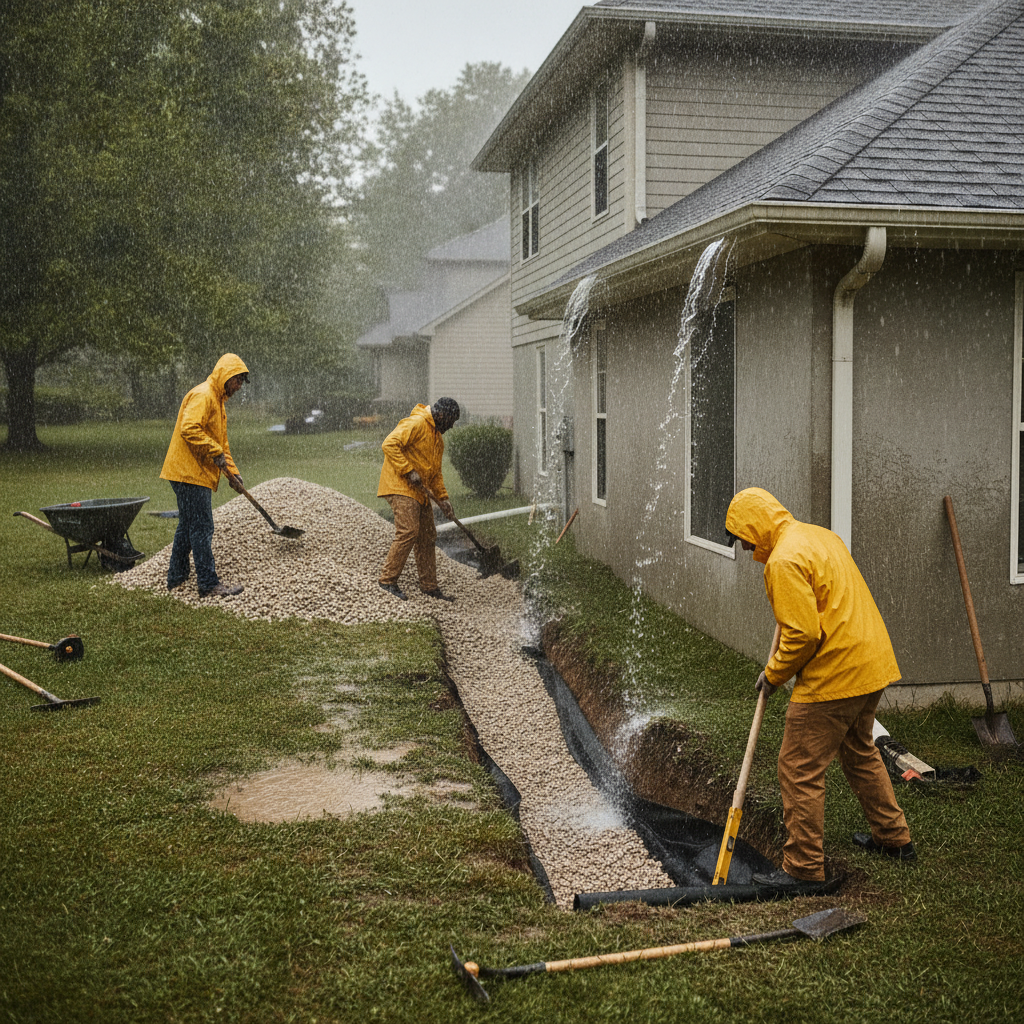
Water pressure against your foundation walls can cause cracks, bowing, and leaks. Over time, that leads to much bigger, much more expensive headaches. A French drain’s job is to intercept that water and guide it away from your house before it can cause trouble.
A Quick Story From a Homeowner in Ballantyne
I was talking with a homeowner named Sarah in Ballantyne a while back. She had water seeping into her crawl space every time it rained hard. She was worried about mold, rot, and the musty smell that was starting to creep into her house.
She got a few quotes. One company proposed a 75-foot French drain along the back and side of her house. The quote came in around $3,750, which worked out to $50 per foot. It felt like a lot at the time, but she considered the alternative—the potential cost of mold remediation and foundation repairs down the road.
Long story short, she went for it. The next big storm rolled through, and she checked her crawl space. Bone dry. For her, that wasn’t just a repair; it was peace of mind. It’s one of those quiet foundation repair success stories in a Charlotte NC case study where the “success” was preventing a disaster before it ever happened.
So, What’s the Big Takeaway?
Thinking about a French drain isn’t really about landscaping; it’s about protecting the biggest investment you have—your home. Yes, there’s an upfront cost. But when you weigh it against the potential for thousands (or even tens of thousands) in foundation work, it starts to look a lot more reasonable.
If you’re seeing pooling water, damp spots in the basement, or a crawl space that feels more like a swamp, don’t just ignore it. Looking into the average French drain installation cost per linear foot in Charlotte is a great first step.
You don’t have to solve it all today. But maybe the next time it rains, take a walk around your property and see where the water is going. It might be telling you more than you think.