
I was grabbing coffee with a homeowner over in Greensboro the other day, and he was telling me about this musty, damp smell in his house he just couldn’t kick. He’d gone down into his crawl space and found what he thought was a good thing: a thin, clear plastic sheet covering the ground. He figured he was covered. But the smell was still there, and his energy bills were creeping up.
That plastic sheet? It was a vapor barrier. But the problem was, it was the wrong one for the job. And that’s a conversation I have all the time. Here in the Carolinas, we’ve got that heavy, humid air and expansive clay soil, which means the ground under your house is basically breathing moisture right up into your home’s foundation. This is where getting the best vapor barrier thickness for a North Carolina crawl space isn’t just a minor detail—it’s a huge deal for the health of your home.
So, What’s the Big Deal with a Few Millimeters of Plastic?
It’s easy to think, “It’s just a sheet of plastic, how different can they be?” But that’s like saying a rain poncho and a deep-sea diving suit are the same thing. They both block water, but one is built for a drizzle and the other is built for serious pressure. Your crawl space is under constant pressure from moisture vapor.
A thin, cheap vapor barrier (usually around 6-mil) is the bare minimum required by building codes. And honestly, it’s just not enough for our climate. Here’s why:
- It Tears Easily: If you ever need to have a plumber or electrician go into your crawl space, a 6-mil liner can get ripped and punctured in a heartbeat. One little tear, and that moisture has a direct path into your home.
- It Degrades Faster: The constant dampness and temperature fluctuations can cause thinner plastics to break down over time, becoming brittle and less effective.
- It Doesn’t Seal Well: Because it’s so flimsy, it’s tough to get a proper, airtight seal around piers and along the foundation walls. Gaps are inevitable.
The result? You still get moisture, mold, musty smells, wood rot, and even pests. You’ve spent money on a solution that isn’t really solving the problem.
Let’s Talk Numbers: What is the Best Vapor Barrier Thickness for a North Carolina Crawl Space?
This is where we get into the specifics. Vapor barrier thickness is measured in “mils,” where one mil is one-thousandth of an inch. While 6-mil is the minimum, it’s rarely what we at Piedmont Foundation Repair recommend.
For most homes in North and South Carolina, the sweet spot is a 10-mil or 12-mil vapor barrier. Here’s the difference it makes:
- Durability: It’s significantly more puncture-resistant. You can crawl on it and store things on it (within reason!) without worrying about tearing it. It’s built to last.
- Better Moisture Protection: The thicker material is far less permeable, meaning it does a much better job of stopping water vapor in its tracks.
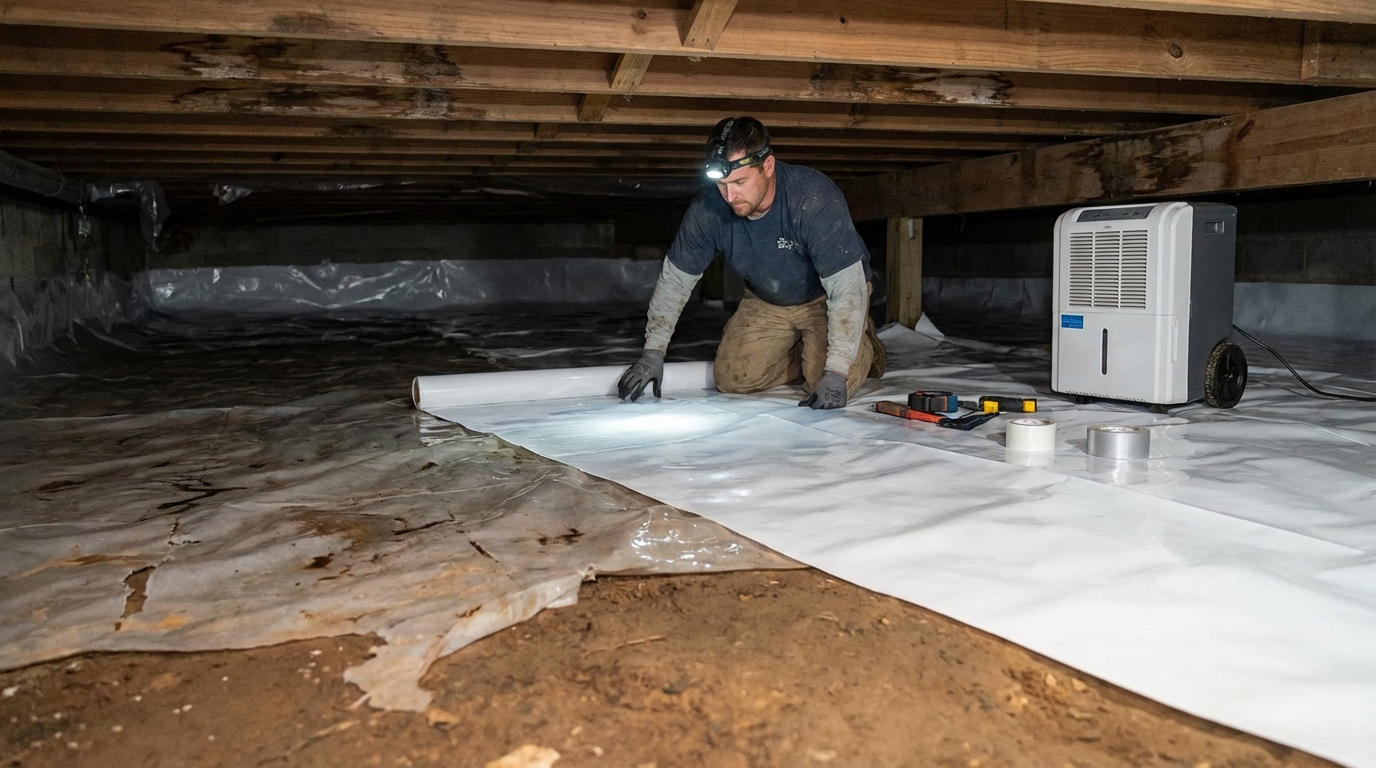
- A Professional Seal: It’s sturdy enough to be properly sealed at the seams and secured to the foundation walls and support piers, creating a truly encapsulated space.
In some cases, like if you have very rocky ground or plan to use your crawl space for heavy storage, we might even go up to a 20-mil liner. It’s all about matching the solution to the specific home.
A Quick Real-Life Story
We worked with a family in Asheville last fall who was dealing with buckling hardwood floors. They’d had another company install a 6-mil liner just two years prior. When we went down to inspect, we saw the problem immediately. The liner was ripped in several places, and you could see dark patches of moisture on the ground underneath. Mold was starting to grow on the floor joists.
We removed the old, torn liner and did a full crawl space encapsulation with a 12-mil, sealed vapor barrier and a dehumidifier. A few months later, the homeowner called to say not only had the floor issue stopped getting worse, but the air inside their home just felt… cleaner. (And honestly, it smelled a lot better too).
What’s the Takeaway Here?
When it comes to protecting your home from the ground up, skimping on the vapor barrier is a classic case of being “penny wise and pound foolish.” That initial savings on a thinner material can lead to thousands in repairs down the road from moisture damage.
If you’re unsure what’s going on under your house, don’t just ignore that musty smell. Choosing the best vapor barrier thickness for a North Carolina crawl space is a critical first step. If you want a no-nonsense assessment of what your home actually needs, give our team at Piedmont Foundation Repair a call. We’d be happy to take a look and give you a straight answer.