
Here’s the Backstory
A few weeks ago I was in a crawl space in Greensboro with a homeowner named Mike.
Humid day, classic North Carolina summer. He shines his flashlight up at the floor
joists and goes, “That black stuff… that’s mold, right? Be honest. And can I just
spray some bleach on it and be done?”
If you’re asking the same thing, you’re definitely not alone. Our weather in NC is
basically mold’s favorite hobby: hot, humid, and sticky. So when those wood joists
in your crawl space start looking fuzzy, streaky, or spotty, it’s not just ugly.
It can mess with air quality and the structure over your head.
So let’s talk about professional methods for removing mold from wood joists crawl space NC
homes rely on. What the pros actually do. What works. What’s a waste of money. And
what you can realistically handle yourself.
Let’s Get Honest for a Second
Before we dive into chemicals and tools, here’s the truth: killing mold is the
easy part. Keeping it from coming back is the real game.
Mold on crawl space joists usually means one thing:
- Too much moisture in the air (high humidity, often 60%+)
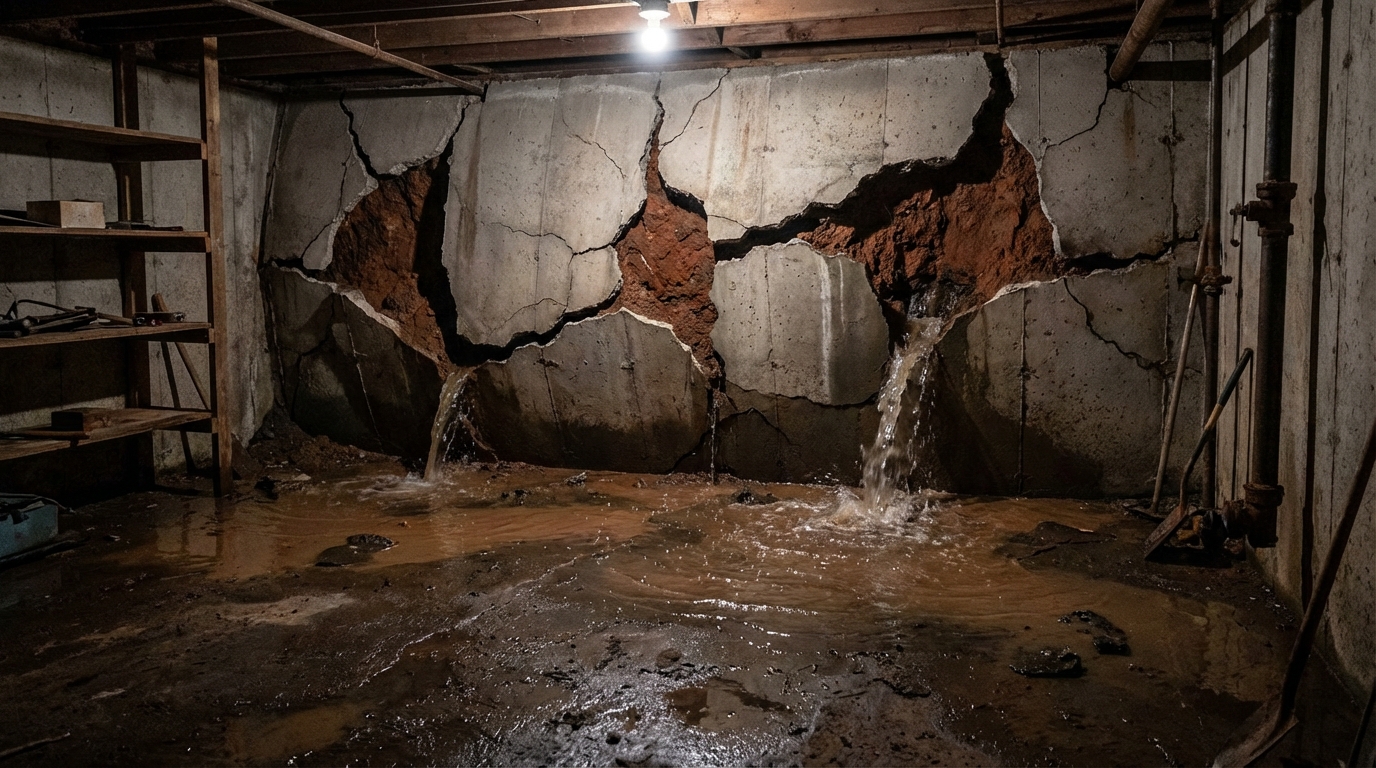
- Water getting into the crawl space (standing water, seepage, leaks)
- Poor ventilation or no real moisture control
So yeah, you can clean it. And you should. But if nobody fixes the humidity and
water issues, it’s like wiping sweat off your face while you stand in a sauna.
You’ll just keep wiping.
Let’s Break This Down: How Pros Actually Remove Mold from Joists
Different companies have slightly different systems, but most solid contractors in
North Carolina follow a similar pattern:
1. Suit Up and Set Up Safety
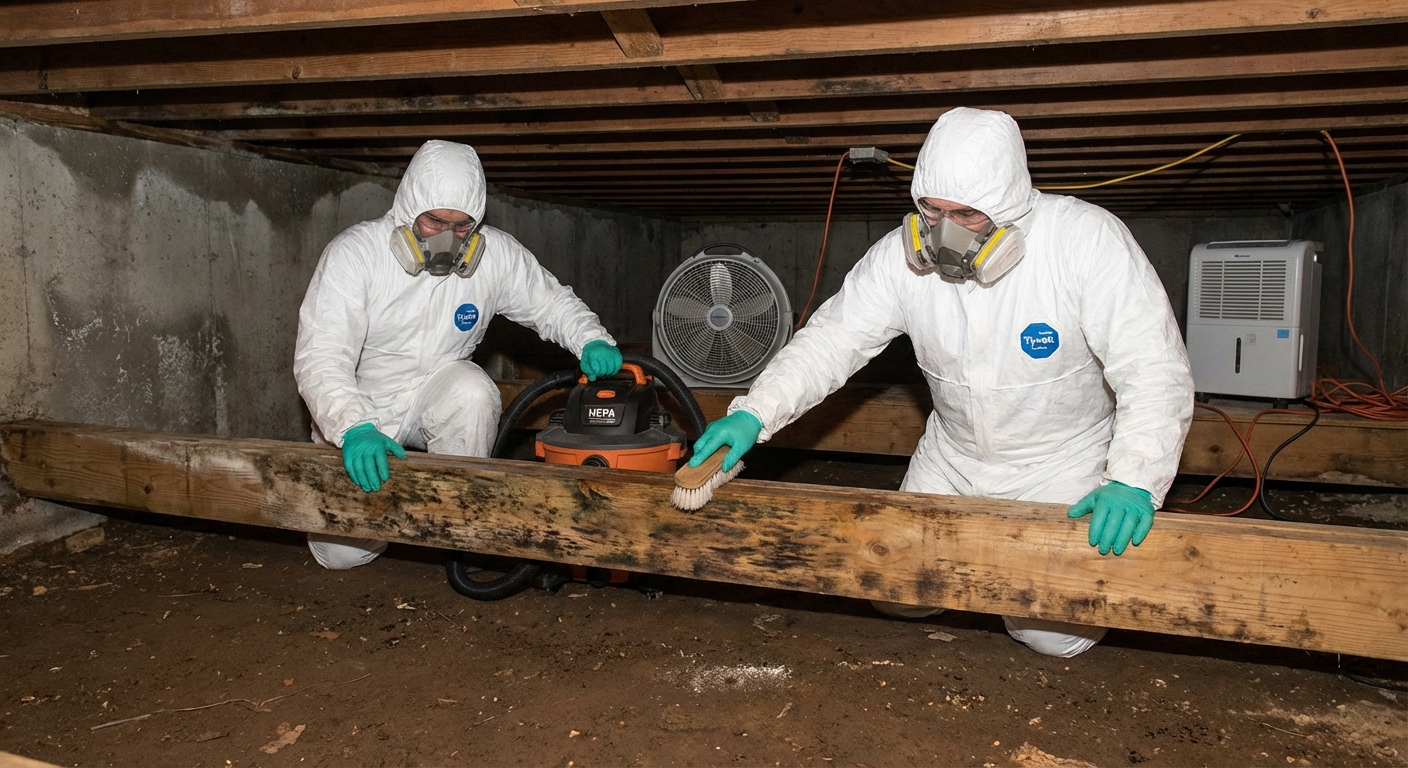
Crawl spaces aren’t fun, and mold isn’t something you want in your lungs. Pros
usually come in with:
- Full-face or half-face respirators with proper cartridges
- Gloves and coveralls
- Eye protection
- Fans or negative air machines (to pull dirty air out and bring fresh air in)
For bigger jobs, they may also use containment at the access point so moldy dust
doesn’t blow back into your house.
2. Dry It Out First
Here’s what I see people skip all the time: drying.
Pros know that trying to treat mold on wet wood is like painting over a wet wall.
So step one is usually:
- Checking moisture in the joists and subfloor with a meter
- Using fans and/or a crawl space dehumidifier to bring wood moisture content down
- Addressing standing water or active leaks first
In a lot of NC crawl spaces, that means also looking at:
- Gutters dumping water at the foundation
- Poor grading around the house
- Open vents pulling in muggy summer air
3. Physical Cleaning (The Un-Glorious Part)
This is where the work really happens. A good pro doesn’t just “spray and pray.”
They physically remove as much mold growth as possible:
-
HEPA vacuuming: They use a HEPA vacuum to pull loose spores and
dust off the joists and subfloor. -
Scrubbing: Brushes, pads, and sometimes pole-mounted scrubbers
to agitate the surface and knock off growth. -
Soda blasting or media blasting (on heavy growth): Kind of like
sandblasting, but gentler on wood. This is for thicker or older mold build-up.
The goal is simple: get the mold off the wood, not just turn it from black to white.
4. Applying Mold Cleaners and Treatments
This is where people always ask, “So what do the pros actually use?”
It varies, but you’ll usually see:
-
EPA-registered mold cleaners or fungicides: These are designed
to kill mold and mildew on surfaces. They’re often non-bleach formulas that
penetrate the wood better. -
Stain removers: Sometimes mold is dead but still stained into
the wood. Pros may use a separate product to lighten those stains (purely cosmetic). -
Encapsulant or sealant (optional): On some jobs, a pro will apply
a mold-resistant coating to joists after cleaning, like a white or clear sealant
that makes the wood less friendly to future mold.
And no, most professionals don’t rely on straight household bleach on wood joists
underground. Bleach can be harsh, doesn’t always penetrate porous wood well, and
it adds extra moisture.
5. Fixing the Moisture Problem So It Stays Gone
This is the part that separates a quick cleanup from an actual solution.
After cleaning, most pros in NC will recommend some combo of:
-
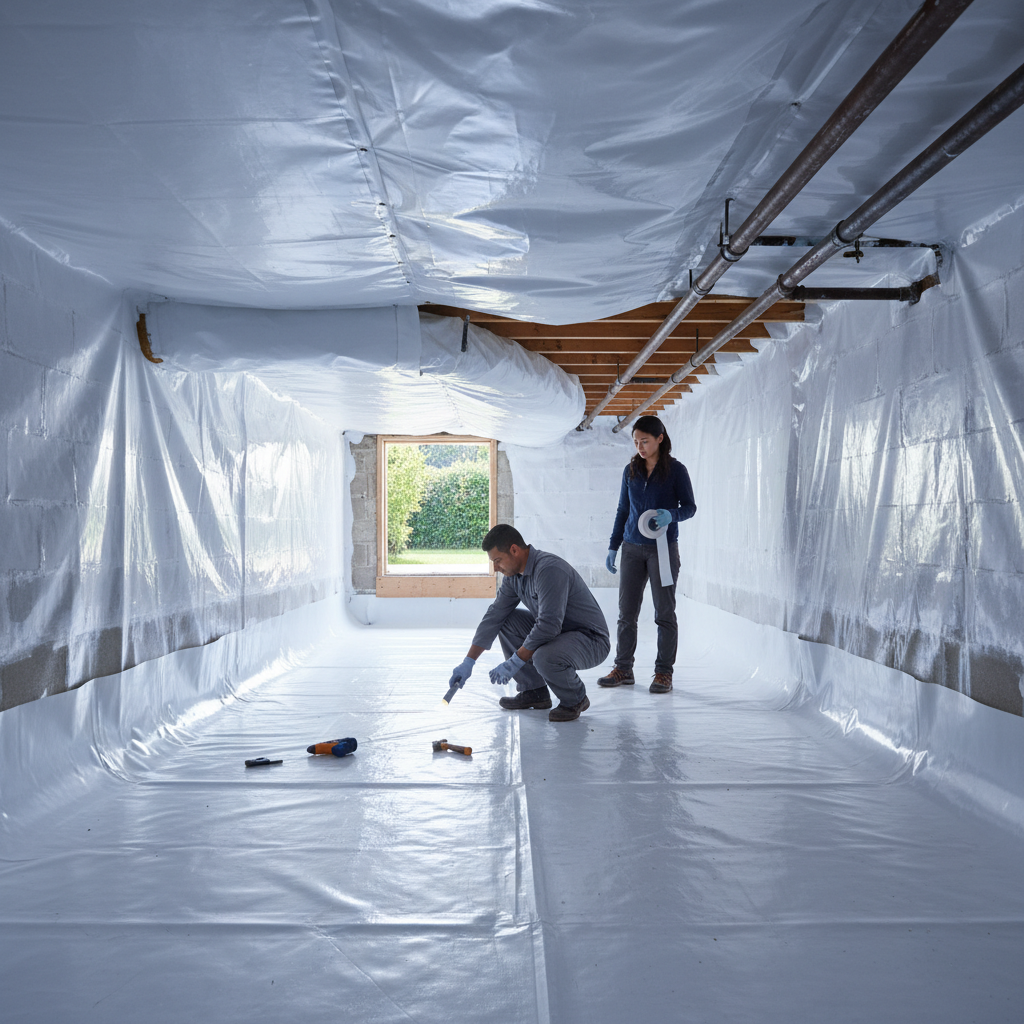
Crawl space encapsulation: Installing a heavy vapor barrier,
sealing vents, and sometimes insulating walls. -
Dehumidifier: A crawl-space rated unit that keeps humidity in
the 40–55% range. -
Drainage help: French drain, sump pump, or simple grading fixes
outside to keep water away from your foundation.
It sounds like a lot, but here’s why it matters: mold doesn’t come back because
you didn’t scrub hard enough. It comes back because the space is still wet.
A Quick Reality Check: When Can You DIY… and When Not To?
Let’s be real for a second. You can do some of this yourself, especially if:
- The mold area is small (think: one corner, not the whole crawl space)
- You’re comfortable in tight spaces
- You’ve got proper safety gear (real respirator, not just a cloth mask)
DIY might look like:
- Setting up fans and drying things out
- Wiping small sections with a store-bought mold cleaner
- Laying basic plastic on the ground as a temporary vapor barrier
But call a pro if:
- You see mold on most of the joists or all the way across the crawl space
- You smell strong musty odor inside your living space
- The wood looks soft, saggy, or damaged
- Anyone in the house has breathing issues or mold sensitivities
I don’t know everything, but I can tell you this: once you start seeing structural
concerns or wide-spread growth, it’s worth having a trained set of eyes under there.
A Real-Life Moment from Right Here in NC
Let me share that Greensboro story I mentioned earlier.
Mike had a 1970s ranch with a vented crawl space. No plastic on the ground.
Joists that looked like a black-and-white leopard print. He’d already tried the
“spray bleach from a garden sprayer” trick once. It smelled like a YMCA locker room
for a week and the mold came back in one summer.
Here’s what the crew ended up doing:
- Set up a dehumidifier and fans for a couple of days to dry the space
- HEPA vacuumed all the joists and subfloor
- Scrubbed visible growth, then applied a professional mold cleaner
- Applied a white mold-resistant coating to the worst areas
- Installed 12-mil vapor barrier over the dirt floor and sealed the seams
- Closed the old vents and added a crawl-space dehumidifier
Was it cheap? No. I think his total was just under $8,000 (which made him swallow
hard at first). But months later, he told me over lunch in downtown Greensboro that
his floors felt more solid, the musty smell was gone, and his wife’s allergies were
noticeably better.
And here’s the kicker: that mold hasn’t come back because the space finally stays
dry.
The Part No One Talks About
Something I keep seeing in crawl spaces from Charlotte to Asheville to Columbia is
this: people are embarrassed. They feel like a “bad homeowner” because there’s mold
under their house.
Please don’t beat yourself up. Our climate here is tough on homes. Humidity plus
older vented crawl spaces is basically a mold factory. You didn’t cause the weather.
The win isn’t having a perfect house. The win is catching problems early and
dealing with them the right way.
What You Can Do Next
If you’ve read this far, there’s a good chance you’ve seen something funky on those
joists and you’re wondering what happens next.
Here’s a simple game plan:
-
1. Grab a flashlight. Safely peek into your crawl space.
Look at the wood joists and subfloor. Any black, white, or green spots? Fuzzy
patches? Stains? -
2. Take photos. Use your phone. Get close-ups and wide shots.
These help later if you want a pro opinion. -
3. Check for moisture. Any standing water? Wet plastic? Condensation
on ductwork or pipes? -
4. Decide your comfort level. Small area and you’re handy? You might
start with some cleaning and basic drying. Bigger problem? Call in a crawl space
specialist who deals with mold and moisture every day. -
5. Think beyond just cleaning. Ask about long-term moisture control
like vapor barriers, drainage, or dehumidifiers so you’re not paying to do this twice.
The professional methods for removing mold from wood joists crawl space NC homes
actually need aren’t magic. They’re just careful cleaning, the right products, and
real moisture control working together.
If this all feels like a lot, start small: take a look under the house, snap a few
photos, and maybe schedule one no-pressure inspection. One step now can save you a
whole lot of headaches—and musty smells—down the road.