
Let’s Step Back for a Second
A homeowner in south Charlotte told me this the other day over lunch at Sunflour Bakery: “I know my floors aren’t supposed to slope like a ski hill, but I keep putting it off because I don’t even know how to schedule a free foundation inspection in Charlotte, NC without getting sold something I don’t need.”
If that sounds even a little bit like you, you’re not alone.
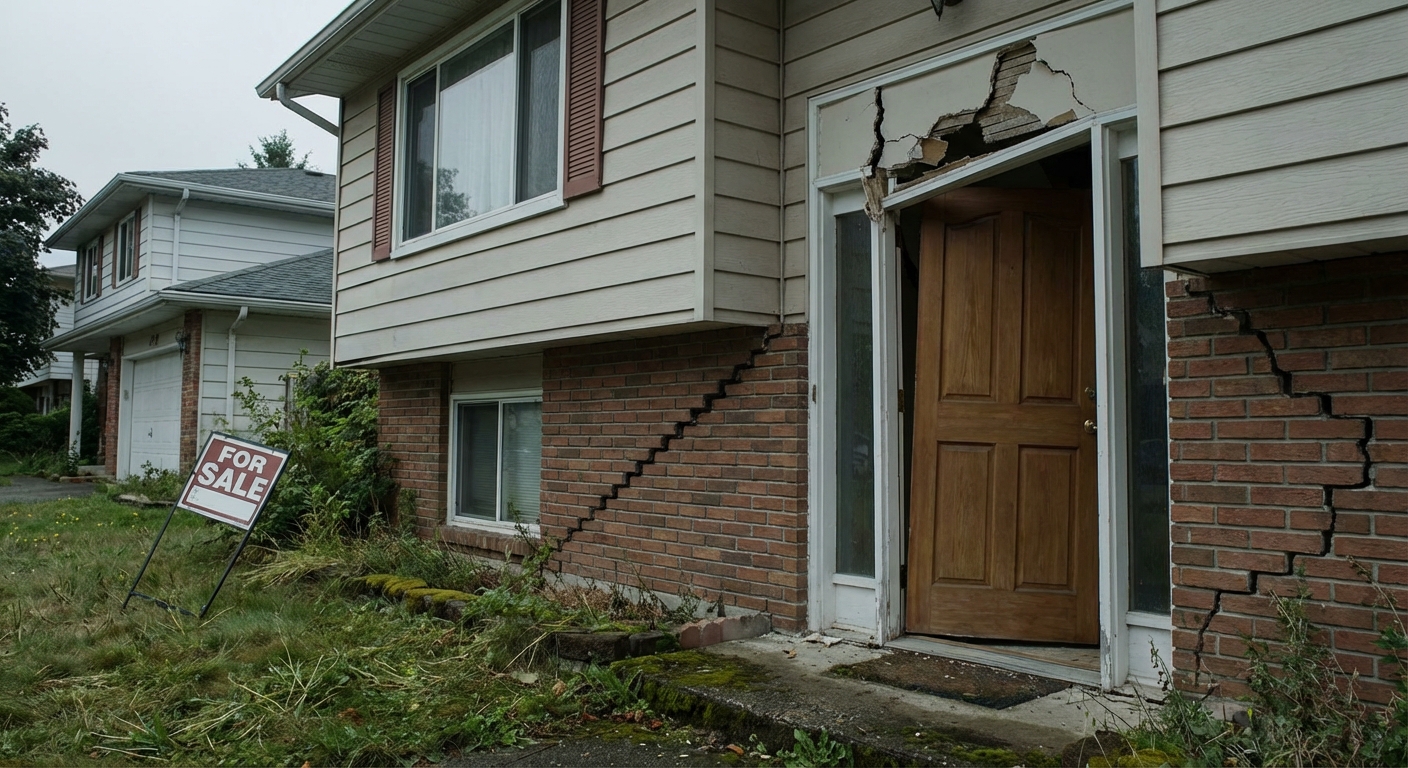
Cracks show up. Doors stick. The brick line looks a little wonky. And then your brain does that thing: “This is probably nothing… I’ll deal with it later.” But later has a way of turning into months. Or years.
So let’s make this simple and walk through how to actually get someone out to your place, what to expect, and how to keep it low‑stress and low‑pressure.
Why This Matters More Than That New Paint Color
Here’s the truth: paint, flooring, new cabinets — they’re all fun. Foundation problems? Not fun at all. But they’re the thing that quietly makes all the “fun” stuff either worth it… or kind of a waste.
In Charlotte, the red clay, the cut-and-fill neighborhoods, and our wild swings between heavy rain and dry spells are rough on foundations. You see it in places like Steele Creek, University, Ballantyne, Mint Hill — pretty much everywhere.
And here’s the kicker: catching movement early is almost always cheaper and easier than waiting until the cracks are big enough to slide a quarter into.
Let’s Break This Down: What a “Free Foundation Inspection” Really Is
Different companies use different terms — inspection, evaluation, assessment. But the idea’s usually the same:
- Someone comes to your home (not just a phone call).
- They look at cracks, doors, floors, and the outside of your house.
- They check the crawl space or basement, if you have one.
- They measure for floor slope or settlement.
- They explain what they’re seeing in plain language.
- They give you options, prices, and whether it’s “fix now” or “keep an eye on it.”
You shouldn’t be paying for that first look. The goal is to understand what’s going on, not sign a contract on the spot (unless you really want to).
How to Schedule a Free Foundation Inspection in Charlotte NC (Step by Step)
Let’s talk about the part that usually feels annoying: actually getting it on the calendar.
-
Grab your “weird stuff” list.
Before you even reach out, walk your house:
- Note where cracks are (above doors, in brick, in the garage slab).
- Check which doors or windows stick — especially after rain.
- Look at floors: any spots where furniture leans or marbles roll?
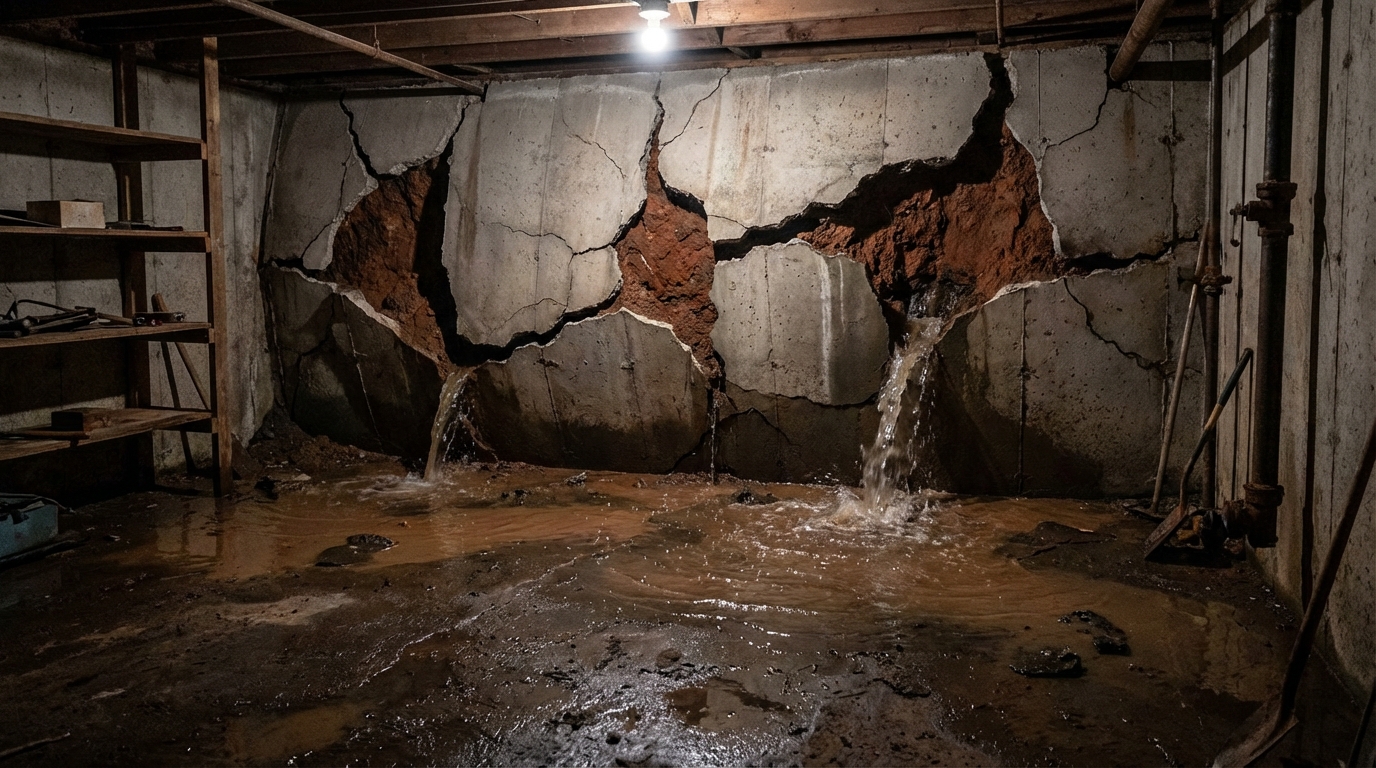
- If you’re comfortable, peek in the crawl space for moisture, standing water, or moldy smells.
You don’t have to be an expert. Just write down what you see. A few photos on your phone help a ton.
-
Pick 2–3 possible days and times.
Most inspections take about 60–90 minutes. Plan around that:
- Choose windows like “Tuesday morning” or “Thursday after 3 p.m.”
- Make sure whoever’s on the mortgage (or decision-maker) can be there.
- If you work uptown, think through traffic — 5 p.m. in Charlotte is… not great.
-
Reach out the way you actually like to communicate.
You’ve got options:
- Online form: Quick, 24/7, no awkward phone call at work.
- Phone call: Best if you’ve got a lot of questions.
- Email: Handy if you want everything in writing.
When you reach out, share:
- Your name and address.
- How old your home is (rough guess is fine).
- What you’ve noticed (from that list you made).
- Those 2–3 time windows that work for you.
-
Ask two simple questions up front.
This keeps things honest and clear:
- “Is the inspection actually free, even if I don’t move forward with repairs?”
- “About how long will you be at my house?”
If the answers are weird or vague, that tells you something.
-
Get a confirmation (and keep it).
Once you’re on the schedule, you should get:
- A date and time.
- Who’s coming (name or role).
- How they’ll contact you when they’re on the way (text, call, email).
Screenshot it or save the email. That way, if there’s any mix-up, you’re covered.
A Quick Reality Check: What Happens During the Visit
You don’t need to clean the whole house. It’s not a party. But a little prep helps:
- Clear access to the crawl space or basement door.
- Move stuff away from the worst cracks or problem areas.
- Have pets secured, so nobody escapes while doors are opening and closing.
During the inspection, expect something like this:
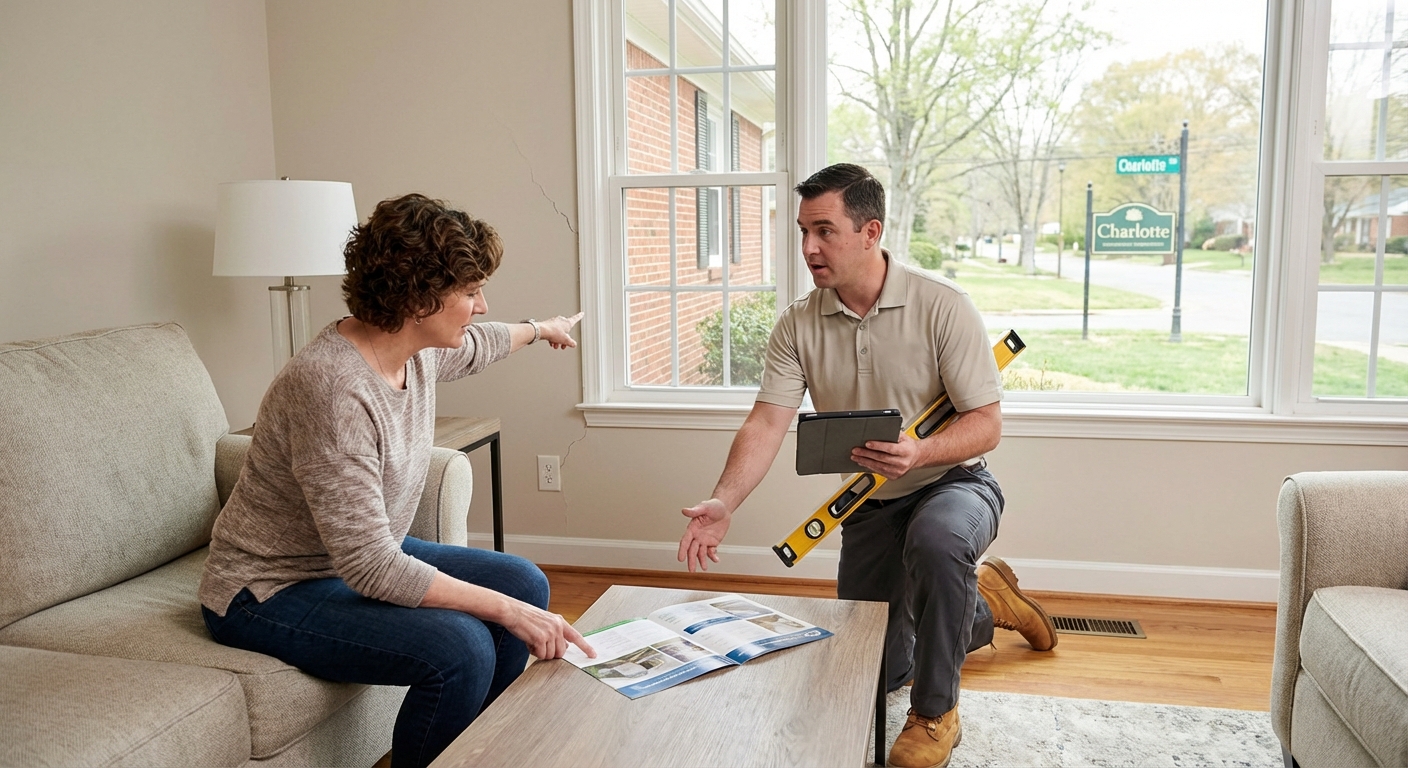
- Walk and talk inside. They’ll look at doors, windows, floors, and cracks.
- Check outside. Brick, siding, foundation walls, grading, and drainage.
- Crawl space/basement review. Moisture, standing water, wood condition, piers, beams.
- Measurements. Some pros use a digital level to map floor slope.
- Explanation and options. In normal-person language — not engineer jargon.
You can (and should) ask things like:
- “Is this active movement or old damage?”
- “What happens if I wait 6–12 months?”
- “Are there smaller ‘starter’ options, or is it all-or-nothing?”
- “Can you show me on my house where the work would go?”
A Real-Life Moment From Right Here in Charlotte
A while back, I met with a homeowner named Lisa in the Highland Creek area. She’d noticed:
- A crack running from the corner of her living room window to the ceiling.
- Her front door dragging on the latch side.
- Her dining room chandelier hanging just a little “off.”
She told me she’d put it off for almost two years because she was sure an inspection meant a huge, same-day sales pitch and a five-figure number.
When she finally reached out, she did exactly what I’m talking about:
- She wrote down what she saw.
- She sent three photos when she scheduled.
- She asked up front: “Is this free even if I say no right now?”
The inspection took about an hour and fifteen minutes. The verdict? Early-stage settlement on one corner, some drainage issues, but not a crisis. She walked away with:
- A drawing of the house showing where things were moving.
- Two options: a “do this now” plan and a “monitor and improve drainage” plan.
- A price range she could plan for — not a surprise bomb.
Funny enough, what she decided to do first wasn’t the big fix. She started with grading and gutters, then circled back to structural work once she’d budgeted. No pressure, no drama.
The Part No One Talks About: Red Flags to Watch For
I don’t know everything, but I’ve seen enough inspections to know when something feels “off.” Watch for:
- Zero questions about your house history. They should ask how old it is, past repairs, water issues, etc.
- No real crawl space or basement check. If they don’t look under the house, that’s a problem.
- “Today only” pricing pressure. Discounts are fine, but your home shouldn’t be a game show.
- Vague explanations. If they can’t explain it simply, they might not understand it well enough.
- No written summary. You should walk away with something you can look at later.
Real talk: a good inspection should make you feel more calm, even if the news isn’t perfect. Not more confused.
Here’s the Big Takeaway
If you’ve made it this far, your house is probably already whispering that something’s off. A crack here, a sticky door there. Maybe some musty crawl space smell you’ve been trying to ignore.
The whole process of figuring out how to schedule a free foundation inspection in Charlotte, NC doesn’t have to be a production:
- Make a quick list of what you’re seeing.
- Pick a couple of times that actually work.
- Reach out in the way you’re comfortable with.
- Ask if it’s truly free, and how long it’ll take.
- Use the visit to get clear answers, not just a quote.
What You Can Do Next
If this all feels like a lot, don’t try to solve everything today. Start with just one small step:
- Walk your house tonight and take 5–10 photos of anything that bugs you.
- Tomorrow, when you’re on the couch or at your desk in Uptown, send those photos with a quick note asking about an inspection.
That’s it. No giant commitment, no big speech. Just getting a professional set of eyes on your home so you can stop wondering and start knowing.
And if you’re somewhere between Charlotte, Gastonia, Rock Hill, or over toward Concord and you’re still on the fence, ask yourself one question: will waiting six more months make you feel better about this, or just more stressed?
If it’s the second one… it might be time to get that visit on the calendar.