
Here’s the Backstory
A few months ago I was sitting at a brewery in South End Charlotte, and a homeowner leaned over and asked, “Hey, random question… do you think my house is sinking or am I just paranoid?”
We laughed, but then he pulled up pictures of cracks in his brick and doors that wouldn’t close. Classic
symptoms of foundation failure due to clay soil in NC.
If you live pretty much anywhere from Charlotte to Raleigh, down through Rock Hill and over toward Greensboro, you’re living on some form of clay. And that clay doesn’t just sit there quietly. It swells when it’s wet, shrinks when it’s dry, and your foundation is stuck in the middle of that tug of war.
Let’s Make This Simple
Clay soil is like a sponge with mood swings.
- Lots of rain? Clay swells and pushes on your foundation.
- Hot dry spell? Clay shrinks and pulls away, leaving gaps under and around your home.
That constant movement can crack, tilt, and twist your foundation over time. And honestly, most people don’t notice the early signs. They notice the “oh no” signs.
Let’s walk through what to watch for, so you can catch problems before you’re pricing out major repairs.
Here’s the Truth About Clay Soil in NC
Around North Carolina and parts of South Carolina, you’ll hear people talk about:
- “Carolina red clay”
- “Expansive clay”
- “Shrink-swell soil”
Different names, same headache: a soil type that changes volume a lot with moisture. According to geotechnical studies of Piedmont and coastal plain soils, expansive clay is a known cause of foundation movement and structural stress for homes (https://www.usgs.gov/programs/earthquake-hazards/natural-hazards-expansive-soils).
I don’t know everything, but I’ve seen enough houses in Charlotte, Gastonia, Concord, Spartanburg, and Greenville to say this: if your home is on clay, ignoring early warning signs is almost always more expensive than dealing with them early.
Let’s Break This Down: Common Symptoms to Watch For
Here are the big symptoms of foundation failure due to clay soil in NC that pop up again and again.
1. Cracks in Walls (Especially Above Doors and Windows)
A tiny hairline crack from paint shrinking? Not a big deal. But pay attention when you see:
- Diagonal cracks starting at the corner of a door or window frame
- Cracks wider than a nickel
- Cracks that keep growing over a few months
- Multiple cracks on different walls in the same area of the house
Clay soil movement tends to make parts of the house settle more than others. That uneven settling stresses your drywall and plaster, and the cracks follow the weakest paths, which are usually openings like doors and windows.
2. Doors and Windows That Stick or Won’t Latch
You know that door that drags on the floor in summer but seems fine in winter? Or the window that suddenly needs a shoulder shove to open?
That can be seasonal humidity, sure. But when clay soil is swelling and shrinking under your foundation, it can twist the framing just enough to:
- Make latches hard to close
- Cause gaps at the top or bottom of doors
- Make window sashes bind halfway up
One sticky door by itself isn’t a panic button. Sticky doors in different spots, plus cracks, plus floor issues? That’s a pattern.
3. Floors That Feel “Off” (Sloping, Bouncy, or Wavy)
You don’t need a laser level to know something’s wrong. Sometimes your body tells you first:
- Your office chair rolls to one side on its own
- Your kid’s toy cars always end up in the same corner
- There’s a spot that feels bouncy when you walk across it
When clay soil shrinks away from parts of your foundation, that section can drop or settle. That settlement shows up as:
- Sloping floors
- High spots or low spots you can feel under bare feet
- Gaps between the floor and baseboards
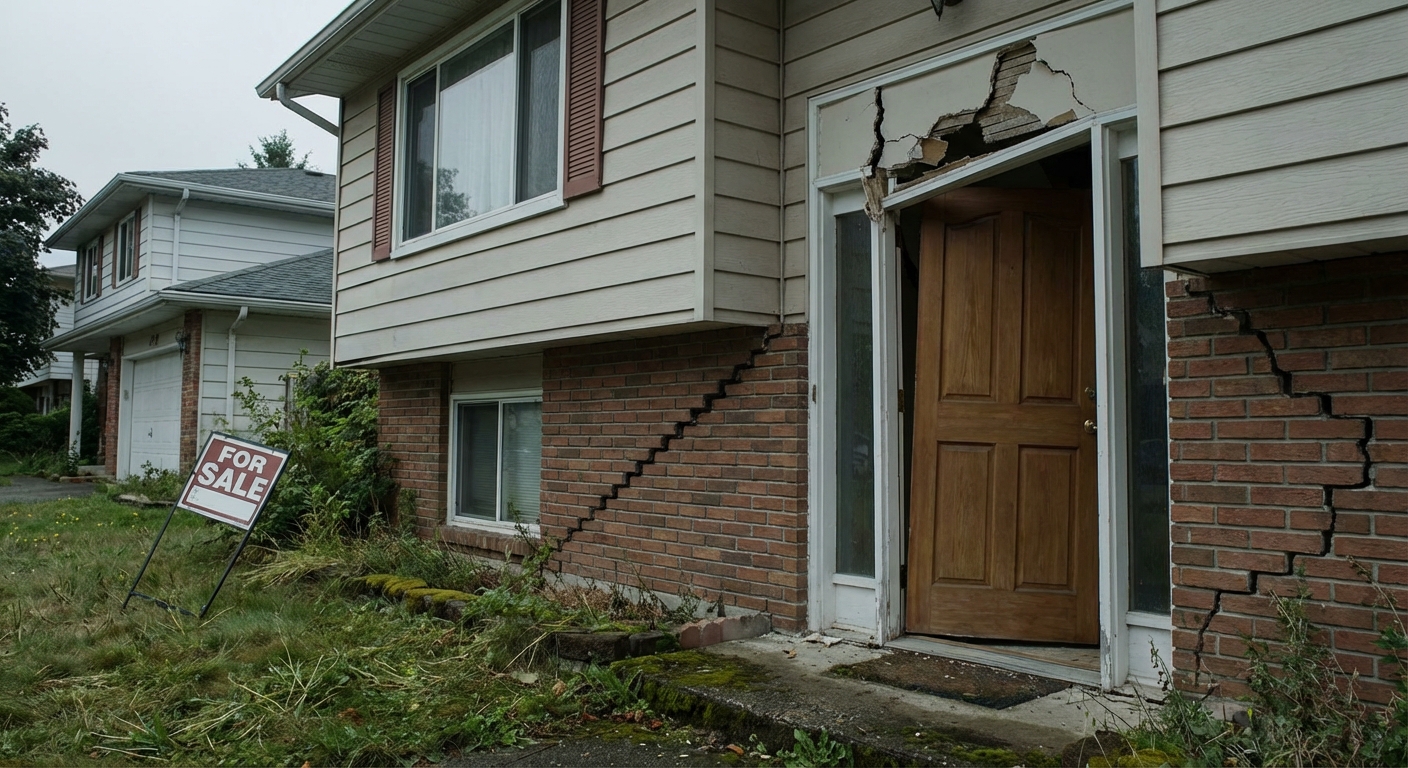
4. Cracks in Brick, Block, or Exterior Concrete
Outside is where clay soil issues often shout the loudest:
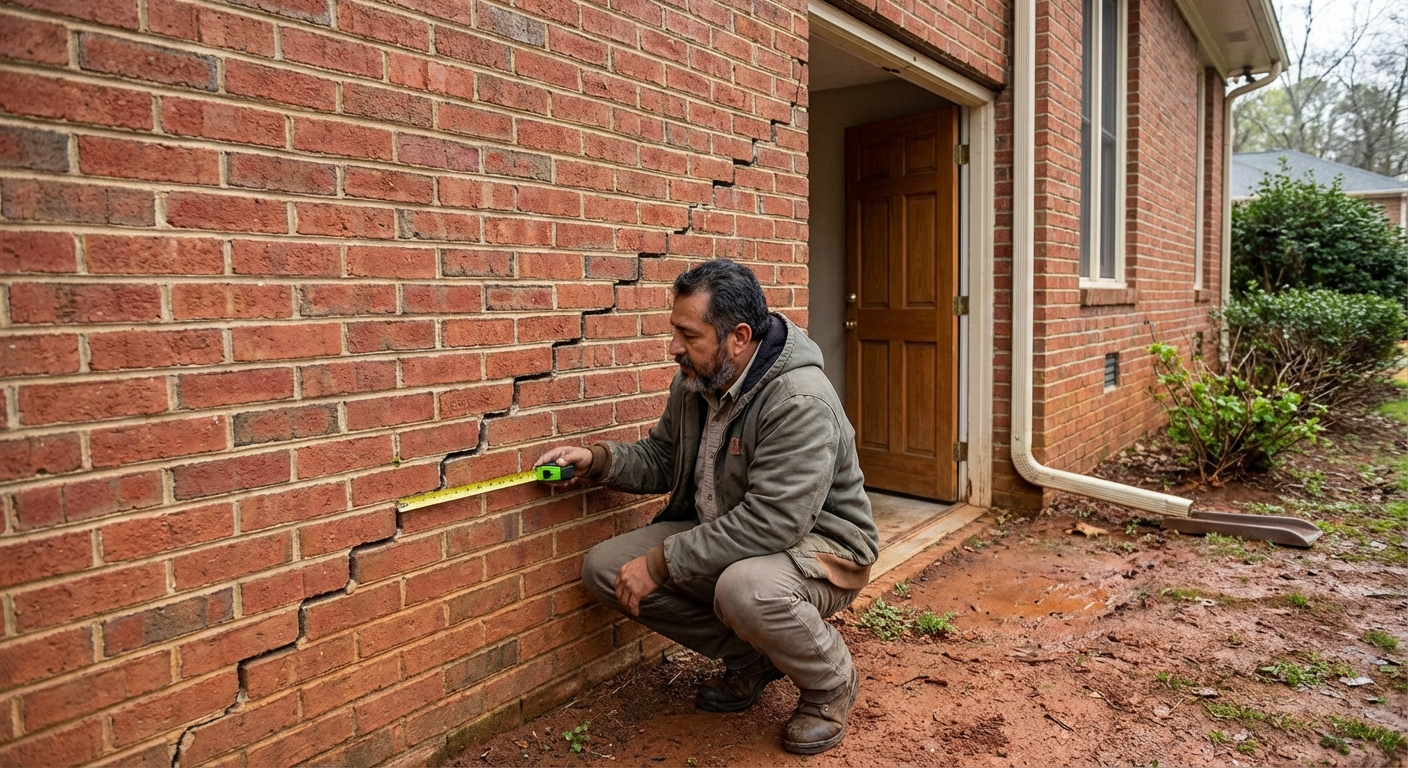
- Stair-step cracks in brick or block walls
- Vertical cracks that are wide at the top or bottom
- Chimneys leaning away from the house
- Concrete porches or steps sinking and pulling away from the house
Those stair-step cracks, especially, are a classic sign of foundation movement. If you can slide a quarter into the crack, it’s worth getting a pro opinion.
5. Gaps Around Windows, Doors, and Trim
As the structure shifts, the nice tight finishes don’t move with it. You might notice:
- Gaps between door trim and the wall
- Caulk lines that keep splitting open
- Light shining through around an exterior door
- Window frames that don’t sit square in the opening
This is especially common on older homes in Charlotte, Greensboro, and Columbia where the original framing is now dealing with decades of clay expansion and contraction.
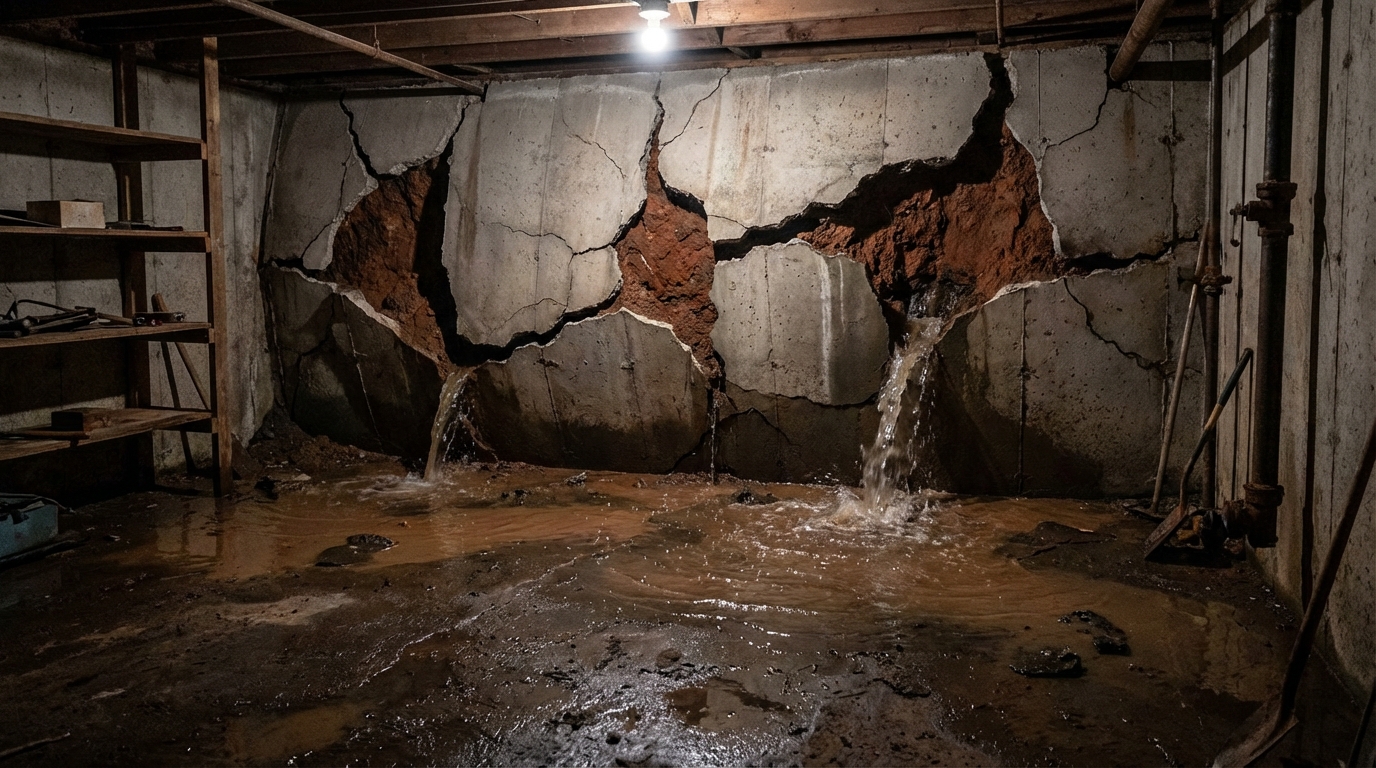
6. Foundation Walls Bowing or Tilting
This one’s more obvious in basements, but you can sometimes spot it in tall crawl space walls too.
- Horizontal cracks along the middle of a block or poured wall
- Walls that lean in slightly at the top
- Blocks that look like they’re sliding or shifting
When clay around your foundation gets soaked (think days of rain, poor drainage, or a downspout dumping at the corner), that soil pushes hard on the walls. Over time, the wall can start to bow.
7. Water Problems That Seem to Come Out of Nowhere
Clay and water are best friends… in the worst way.
Watch for:
- New damp spots on crawl space walls
- Standing water in parts of the crawl space after heavy rain
- Musty odors that hang around even when it’s dry outside
- Efflorescence (white, chalky stains) on foundation walls
When your foundation shifts or cracks, water finds all the new paths. So sometimes the water problem is actually a foundation movement problem in disguise.
The Part No One Talks About: It’s Often a Combo Problem
Clay soil doesn’t usually act alone. It teams up with:
- Bad drainage – gutters dumping at the base of the house, low spots next to the foundation
- Tree roots – big oaks or maples sucking moisture from clay, drying and shrinking the soil
- Construction shortcuts – thin footings, poor compaction, or fill soil that wasn’t properly prepared
That’s why two houses on the same street in Fort Mill can behave totally different. One has great grading and clean gutters, the other has water pouring right at the foundation every storm.
A Quick Reality Check: When to Worry vs. When to Watch
Not every crack = catastrophe. Here’s a simple way to think about it:
| Sign | Usually “Watch It” | Usually “Get It Checked” |
|---|---|---|
| Wall Cracks | Hairline, not growing, under 1/8″ | Diagonal, wider than 1/4″, or spreading |
| Doors/Windows | One sticky door, stable over time | Multiple sticking doors/windows, getting worse |
| Floors | Slight slope, no cracks, no bounce | Noticeable slope, bounce, or gaps at baseboards |
| Exterior Brick | Tiny mortar hairlines, cosmetic | Stair-step cracks or wide vertical cracks |
| Water | Occasional dampness, dries quickly | Standing water, musty smell, recurring wet spots |
A Real-Life Moment
Earlier this year I met a homeowner in Greensboro, we’ll call her Denise, at a coffee shop near Elm Street. She pulled out a notebook (with way better handwriting than mine, by the way) and showed me:
- Dates when she saw new cracks in her dining room
- Photos of her brick where a stair-step crack had grown from 1/16″ to about 3/8″
- A note that said “back door sticks worst after 2–3 days of rain”
Her house sat on a clay-heavy lot on a slight slope. Water from the uphill side was soaking the soil near one corner of the foundation. The clay was swelling, pushing, and then shrinking back when it dried.
Long story short, she ended up:
- Regrading a section of the yard so water flowed away from the house
- Extending a couple of downspouts with buried drains
- Getting a foundation pro to install support under the settling corner
Not cheap, but because she caught the symptoms of foundation failure due to clay soil in NC early, it didn’t turn into a full-blown structural emergency.
Here’s What You Can Do Next
If you’re reading this and thinking, “Okay, this sounds a little too familiar…”, here’s a simple plan:
1. Do a 20-Minute DIY Check
Walk around and look for:
- Cracks inside: around doors, windows, ceilings, and corners
- Cracks outside: brick, block, concrete steps, porches
- Doors/windows: which ones stick, and when?
- Floors: any spots that feel sloped, bouncy, or just “off”
- Water: damp crawl space, musty smell, puddles near the foundation
(Take pictures with your phone and note the date. You’ll thank yourself later.)
2. Watch for Patterns Over Time
One weird crack that never changes? Annoying, but maybe not urgent. Cracks that grow, doors that keep getting worse, or new symptoms all in the same area of the house? That’s your sign.
3. Tidy Up the Obvious Drainage Issues
Clay soil may be the main character here, but water is its sidekick. Simple fixes:
- Clean out clogged gutters
- Add 4–6 foot extensions to downspouts
- Fill low spots so water can’t pool against the foundation
- Make sure mulch and soil aren’t piled up above the foundation
4. Get a Professional Opinion If You See Multiple Symptoms
If you’ve got two or three of the signs we talked about—especially cracks plus sticking doors plus sloping floors—don’t wait. Talk to a local foundation specialist who understands our NC and SC clay soils.
Ask them to explain what they see in plain English, and don’t be shy about asking, “What happens if I wait a year?” Their answer to that question can be very telling.
If You Only Remember One Thing…
Clay soil isn’t going to suddenly turn friendly. It’ll keep swelling and shrinking as long as we have rainy springs and dry summers (so… always).
The key is paying attention to early symptoms of foundation failure due to clay soil in NC—cracks, sticky doors, sloped floors, and exterior brick issues—before they snowball into major structural repairs.
If this all feels like a lot, just start with that 20-minute walk around your house this week. Snap some photos, jot a couple notes, and see what shows up the next time we get a big rain or a long dry stretch. From there, you’ll know if it’s time to bring in backup.