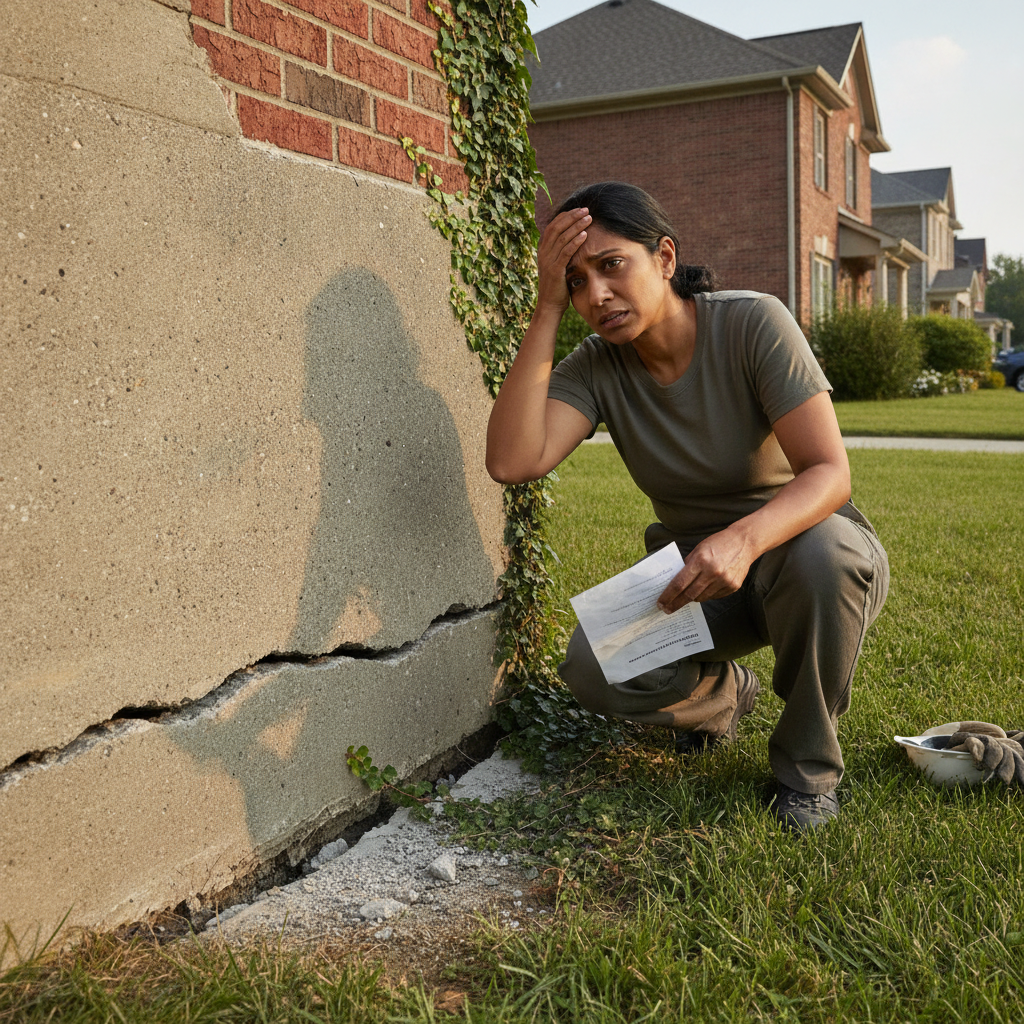

Ever had one of those moments where you’re talking with a friend about home repairs, and suddenly you feel completely lost? I was grabbing a coffee in Charlotte the other day with my buddy, Mark. He was telling me about some unsettling cracks appearing in his brick veneer, and a few doors that just weren’t closing right anymore. Naturally, the topic turned to foundation issues, and he asked, “So, what are the differences between push piers and resistance piers installation in NC? Are they even the same thing?”
It’s a great question, honestly, and one I hear a lot. Most folks just know their house is settling, and they need it fixed. But the “how” can feel like a whole different language. When your home starts to sink or settle, it’s usually because the soil underneath isn’t stable enough to support the weight. And fixing that? It almost always involves some kind of pier system.
Let’s Clear Something Up About Foundation Piers
When we talk about foundation repair, especially here in North Carolina where soil conditions can really vary, you’ll likely hear about two main types of piers: push piers and resistance piers. While they both aim to stabilize your home’s foundation and lift it back to a level position, they go about it in slightly different ways. It’s like using a screwdriver versus a drill – both get screws in, but one might be better for a specific job.
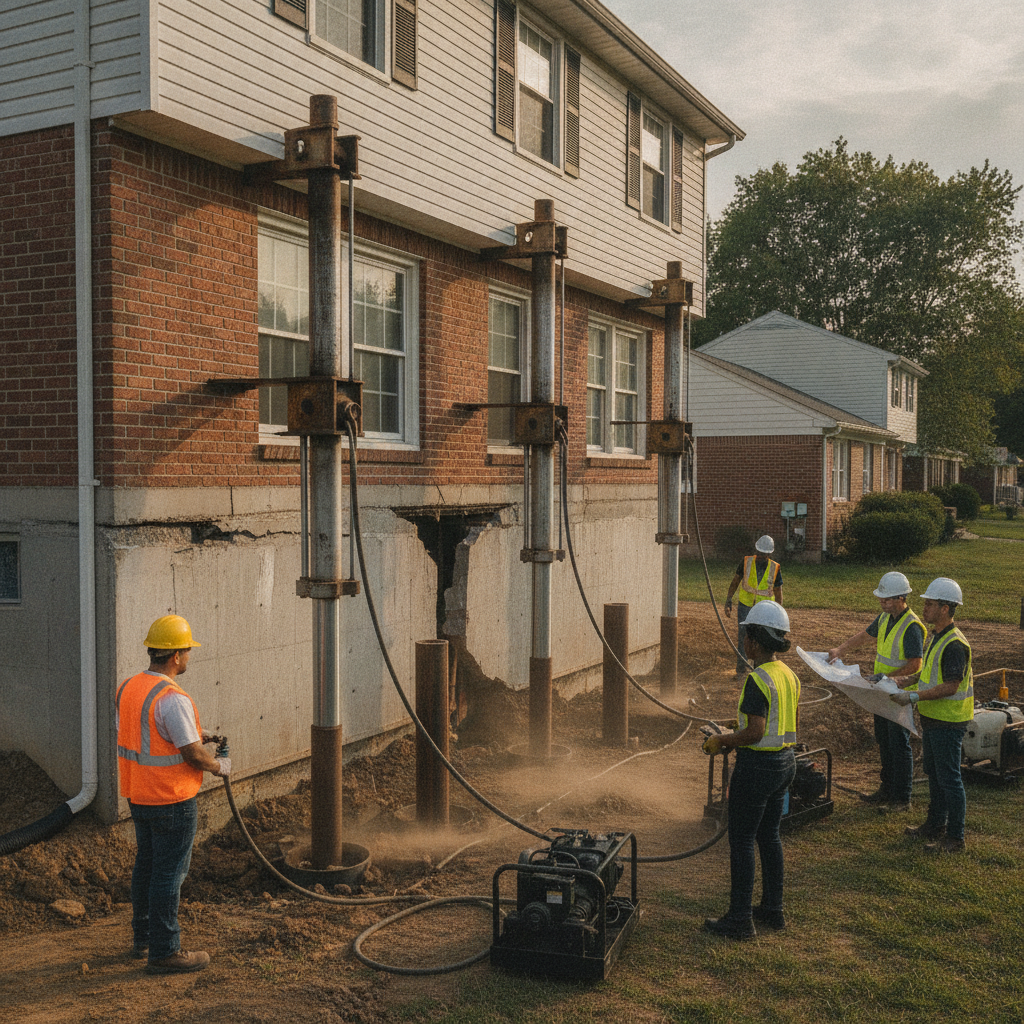
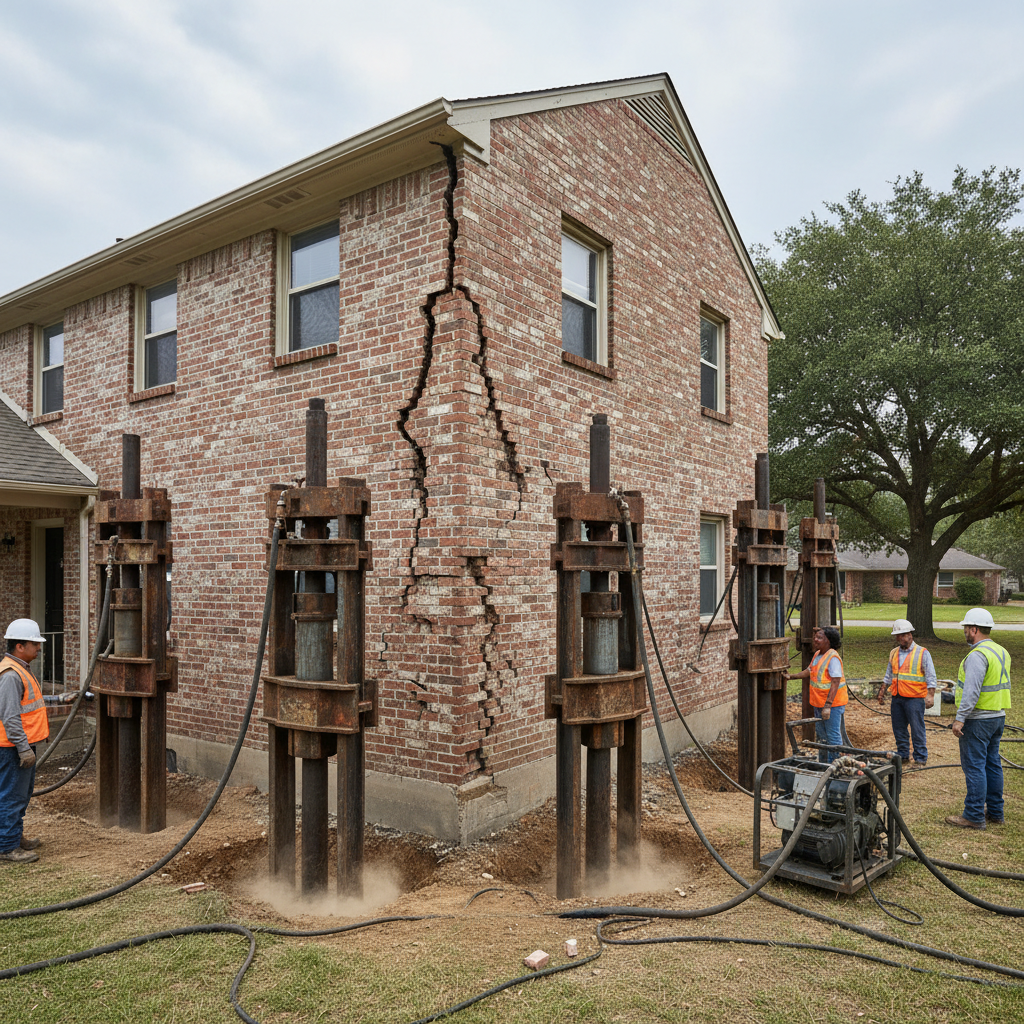
- Resistance Piers (or “Standard” Push Piers): These are usually made of steel, and they’re hydraulically driven deep into the ground. How deep? Until they hit bedrock or a really stable, load-bearing stratum of soil. The “resistance” part comes from the fact that they’re driven down until they meet sufficient resistance from the earth itself. Once they hit that solid ground, the weight of your house is transferred to these piers, essentially lifting the foundation back up and preventing further settlement. They use the house’s weight as a reaction force to drive the piers. It’s a pretty common and effective method for many types of foundation issues.
- Push Piers (often referring to a broader category, but sometimes specifically to “Hydraulic Push Piers”): Okay, this is where it can get a little confusing, because “push piers” is often used as a general term that *includes* resistance piers. However, when differentiating, “push piers” might refer to a system where the pier itself is pushed into the ground using hydraulic pressure, independent of the structure’s weight for the initial drive. The goal is the same: get to stable soil or bedrock. Some systems are designed to be installed with less equipment or in tighter spaces, and they often use a specific bracket system that attaches to the foundation and then uses hydraulics to push the pier sections down. They’re still relying on hydraulic force to drive those steel sections down, but the mechanics of the “push” and how the house is eventually lifted can have subtle differences from a pure “resistance” method.
The core difference often comes down to the installation process and how the forces are applied. With true resistance piers, the house’s weight is integral to the driving process, pushing the piers until the house *itself* is lifted by the resistance. With other types of push piers, the focus might be more on just getting the pier sections down deep using the hydraulic ram, and then lifting the house separately once the pier is set. (I know, a bit nuanced, right? That’s why you call the pros.)
A Real-Life Moment in Raleigh
I remember a client a couple of years back in Raleigh, Janet, whose home was built on some pretty sandy, compressible soil. We’re talking classic North Carolina clay and silt mix, but with a particularly thick layer of the soft stuff. Her porch had visibly separated from the house, and there were serious interior wall cracks.
After a thorough inspection, Piedmont Foundation Repair recommended a resistance pier installation. Why? Because the soil profile showed that we needed to go *really* deep to find stable ground. The resistance pier system allowed us to continuously drive those steel sections down, using the weight of her substantial brick home as the counter-force, until we hit an incredibly dense, load-bearing stratum far below. It provided the direct lifting power needed to bring her foundation back to level, slowly and precisely. Honestly, seeing that porch seamlessly re-join the main structure was pretty satisfying for everyone involved.
What You Can Do Next
So, back to Mark’s question and yours: which one is right for your home? That’s the kicker – it really depends on what’s happening underneath your specific house. The soil type, the depth to stable ground, the severity of the settlement, and even the type of foundation you have (slab, crawl space, basement) all play a role in determining the best solution.
Don’t try to guess. If you’re seeing signs of foundation settlement – those stair-step cracks in your brick, sticking windows or doors, sloping floors – your first step should always be to get an expert assessment. Companies like Piedmont Foundation Repair specialize in this. They’ll come out, examine your home, and perform a detailed soil analysis (which is super important!). They can then explain the pros and cons of different options, whether it’s push piers, resistance piers, or even helical piers, and recommend the best plan for your unique North Carolina home. It’s not just about stopping the problem, but making sure the repair lasts. And honestly, for something as important as your home’s foundation, you want that peace of mind.